
What if the most transformative moment of your aesthetic journey isn’t the appointment itself, but the intentional ritual of restoration that follows? It’s common to feel a sense of unease when you first glimpse the initial post-procedure inflammation, especially when that temporary tightness makes you question if your results will ever soften into the elegant, natural look you desired. Understanding how to reduce swelling after lip fillers is the key to navigating this transition with poise; it allows you to move past the peak edema phase and toward the subtle rejuvenation that reflects your true character.
We believe that recovery should feel like a curated wellness experience rather than a clinical waiting game. This guide shares professional, science-backed strategies to minimize inflammation and reveal your refined results with speed and comfort. You’ll discover the biological reasons behind hyaluronic acid’s hydrophilic nature, a clear timeline of what to expect over the next fourteen days, and the precise self-care steps needed to return to your social life with quiet confidence. By following these clinical insights, you can ensure your healing process is as refined and intentional as the treatment itself.
Key Takeaways
- Understand that initial inflammation peaks within 48 hours as hyaluronic acid naturally draws hydration to the treatment area.
- Discover how to reduce swelling after lip fillers using a precise cold-compress protocol that protects delicate skin while calming the tissue.
- Implement the “two-pillow rule” to encourage natural lymphatic drainage and preserve your refined results during the critical first few nights.
- Explore how targeted supplements like Arnica and Bromelain can support your body’s internal healing rhythm and minimize bruising.
- Master the “Rule of 14 Days” to differentiate between the normal settling process and specific red flags that require professional guidance.
The Biology of Lip Filler Swelling: What is Normal?
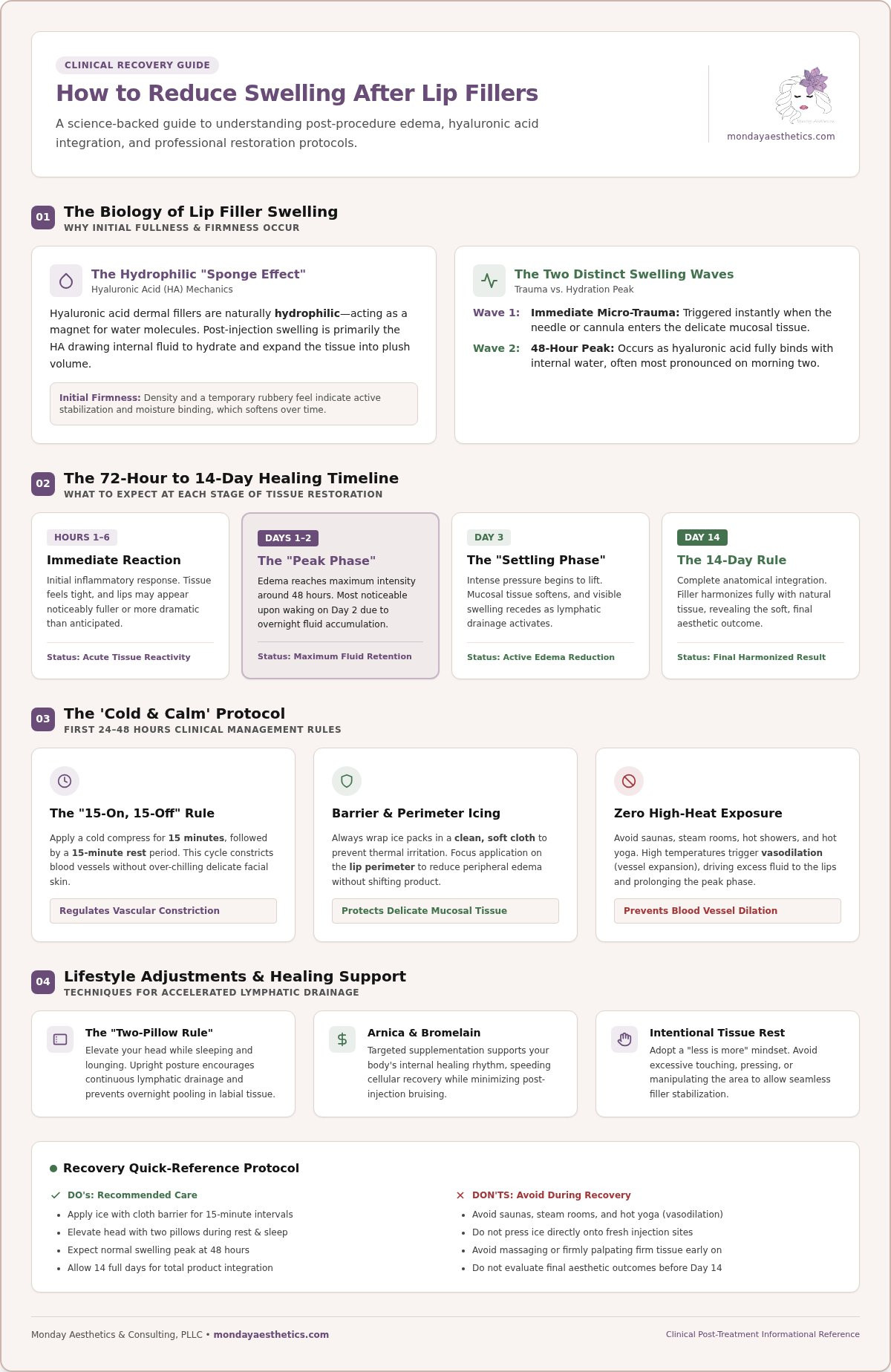
Post-filler edema is the body’s natural response to micro-trauma and hydration. When you choose a lip augmentation procedure, the delicate mucosal tissue experiences a brief period of heightened reactivity. Most modern dermal fillers are crafted from hyaluronic acid, a molecule that is naturally hydrophilic. It acts like a quiet magnet for moisture, drawing water from surrounding tissues to the treatment site. This biological “sponge effect” is exactly what creates the plush, hydrated volume we aim for, yet it’s also the primary driver of initial puffiness. Understanding this mechanism helps you realize that the early fullness isn’t a flaw, but a sign that the product is beginning its work.
It’s helpful to distinguish between two different types of swelling. The first is immediate trauma-induced inflammation, which occurs the moment the needle or cannula interacts with the tissue. The second, more significant wave is the 48-hour peak. This happens as the hyaluronic acid fully binds with your body’s internal water. While mild asymmetry or small, tender lumps are common during this phase, they shouldn’t be confused with more serious complications. Learning how to reduce swelling after lip fillers starts with recognizing that your body is simply in a state of temporary restoration.
The 72-Hour Healing Timeline
- Hours 1-6: You’ll likely experience an immediate inflammatory response. The lips may feel tight, and the initial volume might seem more dramatic than you expected.
- Day 1-2: This is the “Peak Phase.” Swelling is often most noticeable upon waking on the second morning because fluid tends to pool overnight.
- Day 3: The “Settling Phase” begins. You’ll feel the intense pressure start to lift as the tissue begins to soften and the edema recedes.
Why Your Lips Feel Firm Initially
The integration process is a gentle transition, not an instant change. As the filler settles into your tissue, it may feel firm or even slightly rubbery to the touch. This density is caused by the filler’s expansion as it stabilizes its hydration levels. It’s important to remember that this initial firmness is never the final result. Within a few days, the product will harmonize with your natural anatomy, returning your lips to the soft, supple texture that defines a successful, subtle enhancement. Patience is your most effective tool during these first few days of how to reduce swelling after lip fillers.
Immediate Steps: The ‘Cold and Calm’ Protocol for the First 24 Hours
The first day following your treatment is a sacred window for recovery. It’s a time to embrace a “less is more” mindset; allowing your tissue to rest ensures the most elegant integration of the product. While your instinct may be to examine or touch the new volume, the most effective way to protect your investment is through gentle, intentional stillness. Learning how to reduce swelling after lip fillers begins with this commitment to patience and a respect for the body’s natural healing rhythm.
High-heat environments must be avoided during this initial window. Activities such as saunas, steam rooms, or hot yoga sessions cause vasodilation, a process where blood vessels expand and increase fluid flow to the face. This physiological shift can significantly exacerbate edema and prolong the peak swelling phase. Similarly, keeping your head elevated even while relaxing on the sofa helps prevent fluid from pooling in the delicate labial tissues. By maintaining an upright posture, you encourage natural lymphatic drainage and a more comfortable recovery experience.
Safe Icing Techniques
Cold therapy is a cornerstone of post-injection care, but it requires a disciplined approach to be both safe and effective. We recommend the “15-on, 15-off” rule; apply a cold compress for fifteen minutes, followed by a fifteen-minute rest period. This cycle prevents the skin from becoming overly chilled while still constricting the vessels enough to manage inflammation. Always use a clean, soft cloth as a barrier between the ice pack and your skin to avoid thermal irritation or localized frostbite. Aligning with FDA guidance on dermal fillers, it’s vital to treat the area with care, as the skin is temporarily more sensitive following the procedure. Focusing the compress on the perimeter of the lips rather than pressing directly on the injection sites helps manage peripheral edema without disturbing the filler’s placement.
Activity Restrictions for Vascular Health
Pausing your strenuous exercise routine for 24 to 48 hours is essential for maintaining vascular health during recovery. When your heart rate rises, blood pressure increases, which can push more fluid into the interstitial spaces of the lips. This response often leads to more pronounced swelling and a longer wait for your final results to emerge. Gentle movements, such as a light walk through your neighborhood, are perfectly acceptable; however, high-impact activities or heavy lifting should be deferred. If you have questions about your specific recovery plan, the team at Monday Aesthetics is always available to provide personalized guidance tailored to your lifestyle.
Finally, resist the urge to massage or “test” the firmness of your lips. During the first 24 hours, the filler is still stabilizing within the mucosal layers. Any unnecessary pressure can lead to displacement or increased bruising. It is also wise to pause dental visits for at least two weeks post-treatment to prevent mechanical pressure on the perioral area; once fully recovered, visit Dental Plus to maintain your smile’s health with professional check-ups and hygiene care. By honoring these boundaries and practicing restraint, you create the optimal environment for your natural beauty to shine through with clarity and grace.
Nutritional and Supplemental Support for Rapid Recovery
True aesthetic care extends beyond the clinical chair and into your daily rituals. While topical treatments manage the surface, your internal environment dictates the speed at which your tissue integrates the new volume. Adopting a holistic approach to nutrition is one of the most effective ways to influence how to reduce swelling after lip fillers. By choosing anti-inflammatory fuel, you support your body’s natural restoration process and invite your results to settle with grace and clarity.
The Power of Arnica and Bromelain
We often recommend botanical allies to assist with the recovery phase. Arnica Montana, available in both topical gels and sublingual pellets, is widely recognized for its ability to minimize bruising and localized edema. Complementing this is Bromelain, a natural enzyme found in pineapples that specifically targets tissue inflammation. A common protocol involves starting these supplements two days before your appointment and continuing for three days afterward. This proactive ritual prepares your vascular system for the procedure and provides a foundation for a smoother transition. As noted in the Cleveland Clinic lip filler recovery guidelines, these natural aids are a helpful part of a broader recovery strategy. Always consult with your practitioner before introducing new supplements into your routine to ensure they align with your specific health profile.
Dietary Choices to Minimize Water Retention
Managing your sodium intake is vital during the first three to five days. Salt encourages the body to hold onto fluid, which can exacerbate the “sponge effect” of hyaluronic acid fillers and lead to unnecessary puffiness. Opt for fresh, whole foods like leafy greens, lean proteins, and hydrating fruits instead of processed snacks. It’s also wise to avoid the “inflammatory duo” of excess salt and alcohol. Alcohol acts as a vasodilator, widening blood vessels and increasing the risk of bruising while simultaneously dehydrating the rest of your system.
Counterintuitively, drinking plenty of water is essential to flushing out excess sodium and maintaining a healthy fluid balance. This internal hydration doesn’t just help with how to reduce swelling after lip fillers; it sets the stage for long-term skin quality. For those looking to elevate their overall complexion, exploring the SkinVive hydration benefits can reveal how internal moisture management supports lasting radiance. By treating your recovery as a period of intentional wellness, you ensure that your subtle rejuvenation is supported from the inside out.
Lifestyle Adjustments: Sleeping and Daily Habits
Restoring your natural harmony requires more than just clinical precision; it demands a supportive environment for your body to heal. While we often focus on what we do immediately after a treatment, your nocturnal habits and daily skincare routine play a significant role in how to reduce swelling after lip fillers. By aligning your lifestyle with your body’s recovery needs, you ensure that the integration of the filler is seamless and the results remain elegantly refined. A few intentional changes to your routine can make the difference between a lingering recovery and a swift return to your social life.
Elevation is a cornerstone of this process. We recommend the “Two-Pillow Rule” for the first three nights post-injection. By keeping your head elevated at a 30 to 45-degree angle, you leverage gravity to encourage lymphatic drainage and prevent fluid from settling in the facial tissues. It’s equally vital to sleep on your back. Putting direct pressure on fresh filler can lead to uneven distribution or prolonged inflammation. If you’re naturally a side-sleeper, using a travel pillow can act as a gentle physical reminder to remain centered throughout the night.
Optimizing Your Sleep Environment
Gravity’s influence on facial edema is most apparent upon waking. It’s common to notice increased puffiness in the morning as fluid naturally redistributes while you lie flat. Don’t be alarmed by this; it usually recedes within an hour of standing and moving. Using extra support to prevent rolling onto your face is a simple yet effective strategy. This small adjustment protects the delicate vermilion border during its most vulnerable phase. By managing your sleep environment, you proactively address the peak swelling periods mentioned in our earlier timeline.
Protecting your lips from environmental stressors is just as important as rest. UV exposure can aggravate sensitive, healing skin, potentially leading to increased discomfort or hyperpigmentation at the injection sites. We suggest avoiding direct sunlight and extreme temperatures for the first few days. Additionally, your skincare routine should be simplified. Steer clear of active ingredients like Retin-A, AHAs, or BHAs near the mouth, as these can cause unnecessary irritation while the tissue is still reactive.
Safe Daily Maintenance
When cleansing your face, use a gentle touch and lukewarm water. Avoid scrubbing the perioral area, as the tissue needs time to stabilize. You can typically reintroduce lip makeup and SPF after 24 hours, provided there are no open injection points or significant bruising. For the most effective recovery, we recommend using Medical grade skin care Burlington balms that are specifically formulated to soothe and hydrate without clogging the skin. These professional solutions act as a protective veil, ensuring your lips remain supple as they heal. If you’re ready to refine your daily regimen for better aesthetic results, book a personal consultation to discuss a tailored plan for your unique skin needs.
Monitoring Your Results: When to Contact Monday Aesthetics
The final phase of your aesthetic journey is one of quiet observation and gentle patience. While you have already implemented the foundational strategies on how to reduce swelling after lip fillers, the ultimate refinement of your appearance requires time for the product to harmonize with your anatomy. We adhere strictly to the “Rule of Two Weeks” because the delicate mucosal tissue needs a full fourteen days to integrate the hyaluronic acid and for all residual edema to subside. Judging your symmetry or volume before this window has closed is often premature; what may look like an uneven result is frequently just the last remnants of localized inflammation settling into place.
While most side effects are a standard part of the healing process, it’s vital to recognize specific red flags that require immediate clinical attention. If you experience sudden blanching, which is a stark whitening of the skin, or a purplish, net-like mottling of the tissue, please contact us immediately. These signs, along with extreme, escalating pain or unusual heat in the area, are distinct from the typical tenderness associated with injections. Distinguishing between routine aesthetic settling and medical emergencies is a key part of your safety and long-term peace of mind.
The Difference Between Swelling and Lumps
During the first week, you might feel small areas of firmness or what seem like minor lumps. In most cases, these are simply pockets of fluid or the filler itself before it has fully softened and integrated. True filler migration is exceptionally rare when a conservative, “less is more” approach is taken. We understand that seeing minor irregularities can be stressful, but these are often just a standard part of the process for those focused on how to reduce swelling after lip fillers effectively. If these areas persist beyond the fourteen-day mark, we can easily address minor asymmetries during your follow-up appointment to ensure a natural, proportional balance.
Your Journey with Monday Aesthetics & Consulting, PLLC
A personalized aesthetic treatment plan is the best way to ensure your results remain harmonious and consistent over time. At our Burlington, WA clinic, we don’t just provide a service; we partner with you on a long-term path to self-actualization. The Monday Membership is designed to offer this steady hand, providing the professional oversight needed to navigate every stage of your aesthetic journey with confidence. Once your initial healing is complete, we look forward to reviewing your progress and discussing how to maintain your radiant, subtle rejuvenation. If you have reached the two-week mark and are ready for your refinement, please schedule your follow-up or next consultation with Monday Aesthetics & Consulting, PLLC today.
Embrace Your Most Refined Results
Restoration is a delicate art that requires both clinical expertise and personal intention. By mastering how to reduce swelling after lip fillers through disciplined icing protocols and thoughtful nutritional choices, you transform the recovery phase into a ritual of self-care. True harmony takes time; the “Rule of Two Weeks” is your most reliable guide as initial inflammation recedes to reveal the soft, sophisticated volume you envisioned. Patience during this window ensures that your results settle with the elegance and clarity you deserve.
At Monday Aesthetics, we believe that aesthetic care should enhance your individual character rather than alter it. Led by Board-Certified Nurse Practitioner Thea Anderson, our practice is dedicated to providing the Burlington and Skagit County community with results that feel as natural as they look. We invite you to begin your journey toward a more confident, refined version of yourself in an environment that prioritizes your long-term well-being and subtle rejuvenation. It’s a partnership rooted in trust and professional excellence.
When you are ready to experience a meticulous, less-is-more approach to facial enhancement, Book Your Subtle Lip Enhancement at Monday Aesthetics. Your journey toward quiet confidence starts with a single, intentional step. We look forward to guiding you through every phase of your transformation with grace and expertise.
Frequently Asked Questions
How long does swelling typically last after lip fillers?
Acute swelling typically peaks within the first 24 to 48 hours before gradually subsiding over the next five to seven days. While the most visible inflammation resolves quickly, it takes a full 14 days for the hyaluronic acid to integrate and for the final symmetry to emerge. We recommend waiting this full two-week period before evaluating your results or considering any refinements. Patience is essential for seeing the true, subtle rejuvenation we aim for.
Can I eat normally right after getting lip injections?
You should wait until the localized anesthetic has completely worn off before eating to avoid accidentally biting your lips. Once sensation returns, we suggest sticking to soft, easy-to-chew foods for the first 24 hours. Avoiding overly salty or spicy meals is a key part of how to reduce swelling after lip fillers, as these can irritate the injection sites or encourage water retention. Focus on staying hydrated with cool water to support the healing process.
Is it okay to use a straw after lip fillers?
We recommend avoiding the use of straws for at least 24 to 48 hours following your treatment. The repetitive puckering motion required to use a straw puts unnecessary pressure on the fresh filler while it is still stabilizing in the mucosal tissue. This mechanical stress can potentially lead to displacement or increased discomfort. Drinking directly from a glass allows your lips to remain in a relaxed, neutral position, which supports a smoother and more predictable integration.
Will my lips look smaller once the swelling goes down?
It’s common for lips to appear slightly smaller once the initial inflammation resolves. During the first few days, what you see is a combination of the filler volume and the body’s natural inflammatory response. As the edema subsides, the lips will settle into the refined, natural-looking volume we planned during your consultation. This transition is often referred to as “filler shock,” but it simply signifies that the product has successfully integrated with your natural anatomy.
What happens if one side of my lip is more swollen than the other?
Minor asymmetry is a very common part of the initial healing phase. Swelling rarely occurs perfectly evenly; one side may react more intensely to the injection process or have a slightly different vascular response. This is why we emphasize the “Rule of 14 Days” before judging your final look. If noticeable unevenness persists after two weeks, we address it during your follow-up appointment in Burlington to ensure your results are perfectly balanced and harmonious.
Can I take Ibuprofen or Advil to help with the swelling?
We advise against taking NSAIDs like Ibuprofen or Advil for the first 48 hours, as these medications can thin the blood and increase the risk of bruising. For managing any physical discomfort, acetaminophen is the clinically recommended choice. If you’re looking for more ways on how to reduce swelling after lip fillers, natural supplements like Arnica Montana or Bromelain are excellent alternatives that support the body’s anti-inflammatory response without the vascular side effects of traditional pain relievers.
Does icing actually help, or does it just mask the pain?
Icing is a highly effective clinical tool that does much more than provide comfort. By applying a cold compress, you cause the blood vessels to constrict, which limits the flow of fluid into the treated area and significantly reduces the severity of edema. When performed using our “15-on, 15-off” protocol, icing actively manages the inflammatory cascade during the first 24 hours. This proactive step ensures your recovery is as brief and comfortable as possible.
When can I exercise again after my lip filler appointment?
You should pause strenuous exercise for at least 24 to 48 hours. High-impact activities increase your heart rate and blood pressure, which can push more fluid into the lips and prolong the swelling phase. Light walking is perfectly fine and can even assist with circulation, but we recommend waiting until the peak inflammatory window has passed before returning to your full fitness routine. This brief period of rest protects your investment and ensures your results settle beautifully.