
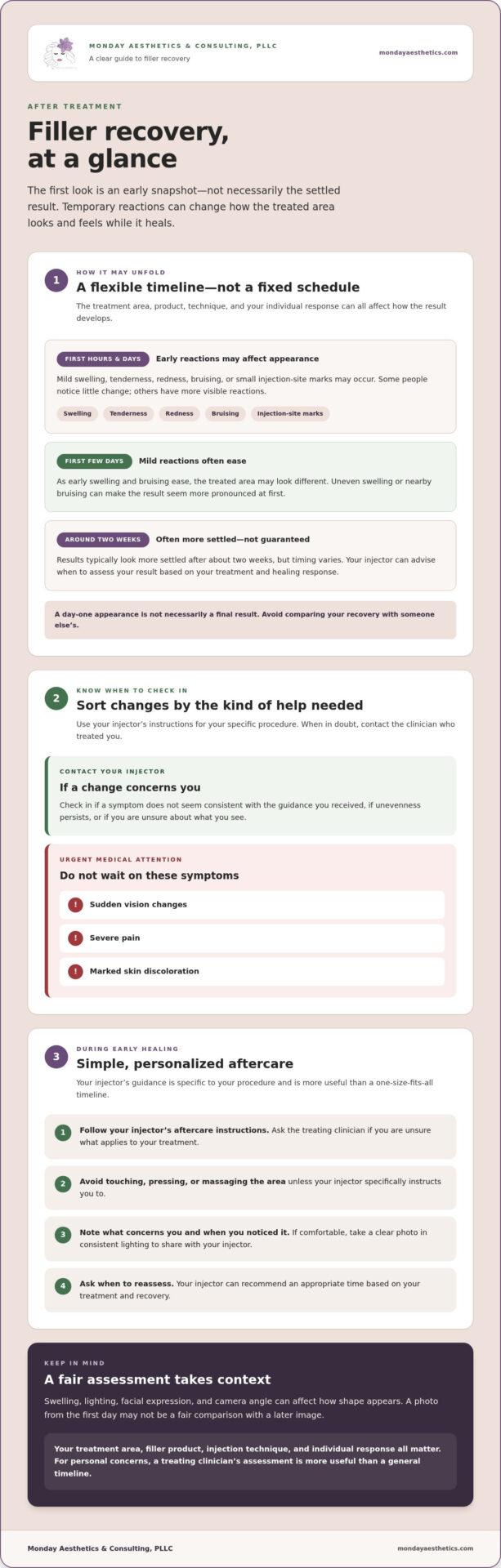
The first look after filler treatment isn’t the final result. If you’re wondering what to expect after getting fillers, remember that early swelling, tenderness, bruising, or temporary unevenness can affect how the treated area looks while it heals.
It’s understandable to wonder whether a change is part of routine recovery or a reason to check in. Filler recovery doesn’t follow one fixed timeline. Mild reactions often ease over the first few days, while results typically look more settled after about two weeks.
This guide covers common changes during early healing, how results develop, and why your injector’s personalized aftercare guidance matters. It also explains which symptoms should prompt a call to your injector and which, such as sudden vision changes, severe pain, or marked skin discoloration, call for urgent medical attention. With a clearer sense of what may happen and when to ask for help, you can give your results time to settle and approach follow-up with greater confidence.
Key Takeaways
- Learn what to expect after getting fillers, including why your early appearance may differ from your clinician’s later assessment.
- Understand how the treatment area, product, technique, and individual response can affect the settling process.
- Follow your injector’s aftercare instructions, and avoid touching or manipulating treated areas unless advised.
- Recognize symptoms that need urgent assessment and know when to contact your injector with questions.
- Prepare for a thoughtful consultation by sharing your health history, goals, and questions with a provider in Burlington or nearby.
What to Expect Right After Getting Fillers: The First Hours and Days
Your appearance immediately after filler treatment may not reflect the settled result. Temporary swelling, small bruises, or tenderness can change how the area looks and feels during the first hours and days. Some people notice little change, while others have more visible reactions. The treatment area and your individual response both influence recovery, so follow the instructions your clinician provides for your procedure.
Common early reactions include mild swelling, tenderness, redness, bruising, and small marks at injection sites. You may experience one, several, or none of these, and their intensity varies from person to person.
Fillers use different materials for different purposes, so general information can’t replace advice tailored to your treatment. This overview of injectable filler provides background on filler materials and potential side effects. For guidance specific to your procedure, follow your injector’s instructions.
Which early filler reactions can be part of recovery?
Mild swelling or tenderness may make the treated area feel fuller or sensitive to touch. Redness, bruising, or small injection-site marks may also appear. The visibility of these effects can vary by treatment area and individual response.
Use your injector’s aftercare instructions rather than trying to diagnose a reaction on your own. If a symptom concerns you or doesn’t seem consistent with the guidance you received, contact the clinician who performed your treatment.
Why can filler look uneven before it settles?
Swelling may be more noticeable in one part of a treated area than another, and bruising can change the appearance of nearby skin. That can make the result seem uneven or more pronounced at first. What you see in the mirror immediately after treatment may differ from what your clinician observes once initial reactions have eased.
Don’t press, massage, or otherwise manipulate the area unless your injector specifically instructs you to. There isn’t one settling schedule for everyone. The product, technique, treatment area, and your body’s response can all affect the process. If unevenness persists or you’re concerned about what you see, raise it with your treating clinician. A personalized assessment is more useful than comparing your recovery with someone else’s.
How Filler Results Develop: From Initial Swelling to a Settled Appearance
The result you see just after treatment is an early snapshot, not necessarily the appearance your clinician will assess once initial tissue reactions have eased. Swelling or bruising can temporarily affect contour, symmetry, and how much volume you think you see. This may be especially noticeable in delicate areas, where small changes can draw your attention.
There isn’t one schedule for every person or treatment. The area treated, filler product, injection technique, and your individual response can all influence how the result develops. Some people see a more settled appearance around two weeks, but timing can differ. Your injector is best placed to advise when to assess your result based on your treatment and healing response.
Day-one photos can provide a record, but they may not offer a fair comparison with later images. Swelling, lighting, facial expression, and camera angle can all affect how shape appears. The FDA’s information on the risks involved with the use of dermal fillers explains why individualized guidance and attention to changes matter.
When should patients expect filler to look more settled?
As swelling and bruising resolve, the perceived shape may change. Avoid treating your first mirror check as a final verdict. A more settled appearance may emerge gradually, and your injector can recommend an appropriate time for assessment based on the treatment and your recovery. If you’re unsure when to check in, ask the clinician who treated you rather than relying on a general timeline.
What if the result looks different than expected?
Make a note of what concerns you and when you noticed it. If you’re comfortable, take a clear photo in consistent lighting to share with your injector. This can help you describe a change without repeatedly checking or comparing images taken under different conditions. Don’t press, massage, or try to adjust the treated area unless your clinician specifically instructs you to.
For more context about treatment in a delicate area, read this under-eye filler guide. If you’d like to discuss a personal concern or ask about an assessment, Burlington filler care is one option to explore with Monday Aesthetics.
Normal Filler Side Effects or a Warning Sign? How to Tell the Difference
Knowing what to expect after getting fillers also means recognizing which changes deserve prompt attention. Mild swelling, bruising, redness, and tenderness can occur after injections, but severe, worsening, or unusual symptoms shouldn’t be dismissed as routine healing. The FDA guide on dermal fillers describes common side effects and less common serious risks.
| Can occur during recovery | Needs prompt attention |
|---|---|
| Mild swelling, tenderness, redness, or bruising near injection sites. | Severe or worsening pain, or marked skin color changes such as pale, white, dusky, or deep red patches. |
| Small injection-site marks or temporary changes in how the treated area looks. | Any sudden vision change, including blurred or lost vision, or other severe, rapidly worsening symptoms. |
| Reactions that vary in intensity from person to person. | Signs that may suggest infection, such as increasing redness, warmth, or drainage. |
This comparison is a guide, not a diagnosis. Online information can’t determine whether a particular symptom is a complication or replace an in-person clinical assessment.
Which symptoms should prompt a call to the injector?
Contact the treating clinic promptly about symptoms that are worsening, unexpected, or persistent, especially marked pain or unusual skin changes. Explain when the symptom began and how it has changed. Don’t wait for a routine follow-up if something concerns you. Follow the clinic’s instructions for reaching the treating clinician, and seek urgent care if symptoms are severe or rapidly progressing.
When is filler-related care an emergency?
Sudden vision changes after filler treatment are an emergency warning sign. Seek emergency care immediately or call emergency services. Don’t wait for a reply from your injector or for a scheduled appointment. The same applies to severe or rapidly worsening symptoms. Emergency services, not an aesthetics clinic, are the appropriate route for urgent emergency assessment.
For less urgent questions, your injector can help interpret your symptoms in light of the treatment area and procedure. If you’re unsure how serious a change is, describe it to a qualified clinician promptly. If symptoms feel urgent, seek emergency assessment.
Filler Aftercare: Practical Steps for the First Days
Aftercare is part of a thoughtful filler experience, but instructions aren’t the same for every treatment. Your injector’s written guidance takes priority because recommendations can depend on the area treated, procedure, health history, and clinician’s protocol. If advice you find online differs from your instructions, ask your injector which guidance to follow.
What should patients do after leaving the appointment?
A simple sequence can help you stay organized without guessing what’s right for you:
- Review your written instructions. Follow the specific guidance your treating clinician provided, including any directions about caring for injection sites.
- Keep contact details accessible. Save the clinic’s information and instructions so you can refer to them if a question or concern comes up.
- Leave the treated area alone. Don’t touch, press, massage, or otherwise manipulate it unless your injector specifically tells you to.
- Check before making changes. Ask your clinician before applying new skincare products to the treated area or changing prescribed medicines. Don’t stop or alter medication on your own.
These steps support clear communication and help prevent well-intended actions from conflicting with your personalized plan.
When can patients resume normal activities and skincare?
Timing depends on the treatment and your injector’s protocol. Before resuming exercise, heat exposure, or your usual skincare routine, confirm what applies to you. Some aftercare plans may advise temporarily avoiding particular activities or products, but restrictions and timing should come from the clinician who knows your procedure and health history.
If you’re asking what to expect after getting fillers, include practical questions in your aftercare conversation: when to return to exercise, whether to pause specific products, and what to do if you’re unsure about a symptom. For area-specific context, see this cheek filler guide.
Clear, individualized instructions can make the days after treatment more manageable. To discuss dermal filler questions or aftercare considerations with Monday Aesthetics in Burlington, contact the practice about filler care.
Your Filler Follow-Up in Burlington: Questions, Reassessment, and Next Steps
A considered filler experience includes more than the treatment itself. Before proceeding, discuss your goals, relevant health history, and what follow-up may involve. Share medicines, allergies, prior treatments, and health concerns that could help your clinician assess whether treatment is suitable for you. Fillers aren’t right for everyone, and an individualized discussion can help set realistic expectations without promising a particular result.
What should you ask your injector about recovery?
Before treatment, ask questions that will make your personalized recovery plan easier to follow:
- Which reactions may be expected for the planned treatment area and product?
- How and when should you contact the clinic with a non-emergency concern?
- When does the clinician recommend reviewing the result?
- Which aftercare instructions apply to your activities, medicines, and skincare?
Keep the answers and any written instructions somewhere easy to find. When you follow up, explain when a concern began and how it has changed so your injector can understand it in context. Confirm how to reach the clinic and what to do if you have a concern outside its usual hours. For urgent symptoms, seek emergency care rather than waiting for a clinic response.
How can a personalized filler plan support natural-looking results?
A consultation is an opportunity to discuss facial balance and the changes you hope to see, while allowing the clinician to consider your health history and whether filler is appropriate. A thoughtful plan can clarify what treatment may and may not address. Your preferences matter, as does an honest assessment of suitability. No plan can guarantee a specific appearance. For individuals who enjoy curating their personal style with body piercings and accessories alongside cosmetic treatments, you can learn more about BodyJ4You to browse dedicated jewelry collections.
It can also help to clarify which type of treatment you’re discussing. Volumizing dermal fillers and hydration-focused treatments have different purposes. If that distinction is relevant to your goals, this SkinVive and traditional filler comparison offers additional context.
Monday Aesthetics & Consulting, PLLC, in Burlington offers dermal fillers and is owned and operated by board-certified Nurse Practitioner Thea Anderson. If you’re considering treatment or have questions about your recovery plan, you can contact Monday Aesthetics about dermal fillers to discuss your concerns and next steps.
Move Forward With a Clear, Personalized Plan
Understanding what to expect after getting fillers can make recovery feel more manageable. Early swelling, tenderness, or bruising may affect how the treated area looks, and your appearance can continue to change as those effects settle. Follow your injector’s personalized aftercare instructions, and avoid touching or adjusting the area unless specifically advised.
Keep the distinction between routine recovery and warning signs in mind. Contact your injector about unexpected or worsening symptoms, but seek emergency care immediately for sudden vision changes or severe, rapidly worsening symptoms. Online guidance can help you prepare, but it can’t replace an assessment from a qualified clinician.
For individualized information, Monday Aesthetics & Consulting in Burlington, Washington, offers dermal fillers and is owned by board-certified Nurse Practitioner Thea Anderson. The practice serves people in Burlington, Sedro-Woolley, Mount Vernon, Stanwood, Arlington, Marysville, Bellingham, Lynden, Everett, Anacortes, Oak Harbor, and La Conner. Contact Monday Aesthetics to discuss dermal filler care, your goals, health history, and questions.
With clear guidance and open communication with your treating clinician, you can approach each stage of recovery with greater confidence and care.
Frequently Asked Questions
Is swelling normal after getting fillers?
Yes, mild swelling can be a common temporary reaction after filler injections, though not everyone experiences it or to the same degree. Tenderness, redness, and bruising may also occur near injection sites. Swelling can affect how the treated area looks at first, so follow your injector’s aftercare instructions rather than trying to assess the result immediately. Contact your treating clinician if symptoms are severe, worsening, or concerning.
How long does swelling last after fillers?
Swelling often eases over the first few days, but the duration varies with the treatment area, product, technique, and individual response. Bruising or tenderness may also affect how the area appears as it heals. Your injector can advise based on your specific treatment and recommend when an assessment is appropriate. If swelling worsens or comes with marked pain or unusual skin changes, seek prompt clinical advice rather than relying on a general timeline.
Can I exercise after getting fillers?
Ask your injector when to resume exercise, since recommendations depend on your treatment and their aftercare protocol. Strenuous activity is commonly avoided for the first 24 to 48 hours, but your clinician’s instructions should guide your decision. If you have a planned workout, mention it before treatment and confirm what’s suitable for you. Don’t exercise through severe pain, rapidly worsening symptoms, or another concerning change. Seek medical advice instead.
What should I avoid after getting fillers?
Follow your injector’s written instructions, which may advise avoiding pressure or manipulation of treated areas. Strenuous exercise, alcohol, and high heat, such as saunas or hot tubs, are commonly avoided for the first 24 to 48 hours, but confirm what applies to your treatment. Ask before applying products to the area or changing prescribed medicines. Don’t press, massage, or try to adjust filler unless your clinician specifically instructs you to.
When will I see the final results from fillers?
Results may look different as early swelling and bruising ease, so the immediate post-treatment appearance isn’t always a reliable guide to the settled result. A more settled appearance is typically visible after about two weeks, though timing varies by treatment area, product, technique, and individual response. Your injector can recommend when to review your result. If you’re unsure about a change, share your concern rather than attempting to adjust the area yourself.
What happens if I have severe pain or vision changes after fillers?
Seek emergency care immediately for sudden vision changes, severe pain, or rapidly worsening symptoms after filler treatment. Call emergency services or go to an emergency department. Don’t wait for a routine follow-up or a clinic reply. Severe pain and unusual skin color changes also need urgent assessment. This FAQ can’t diagnose a complication, so rely on emergency medical professionals for urgent symptoms and contact your injector about other concerning changes.
Can I massage a lump after filler treatment?
Don’t massage, press, or manipulate a lump unless your treating injector specifically tells you to. A raised or uneven area can have different causes, and trying to adjust it yourself may be unhelpful or conflict with your aftercare plan. Note when you noticed it and whether it changes, then contact your injector for individualized guidance. If it’s accompanied by severe pain, unusual skin color, or vision changes, seek urgent medical assessment.
When should I call my injector after getting fillers?
Contact your injector about symptoms that are unexpected, persistent, or worsening, including marked pain or unusual skin changes. Explain when the symptom began and how it has changed, and follow the clinic’s directions for non-emergency concerns. Don’t wait for a scheduled review if symptoms are concerning. For emergency symptoms, such as sudden vision changes or severe, rapidly worsening pain, seek emergency care immediately. Monday Aesthetics in Burlington serves patients from Sedro-Woolley, Mount Vernon, Stanwood, Arlington, Marysville, Bellingham, Lynden, Everett, Anacortes, Oak Harbor, and La Conner.