
Could the most useful first step for facial redness be identifying its cause, rather than choosing a treatment? Persistent redness can have different explanations. IPL treatment for redness may help with some visible vascular concerns, but it isn’t a universal fix. It’s understandable to want clearer skin while also wondering about discomfort, downtime, or possible side effects.
A thoughtful decision starts with understanding what IPL may address, what it can’t, and whether your skin and symptoms make you a suitable candidate. This guide explains how intense pulsed light works for visible redness, why an individualized assessment matters, and what to ask before considering treatment.
You’ll also learn what to expect around treatment, recovery, results, and limitations, including why IPL may reduce visible signs of chronic redness without curing its underlying cause. The goal is to help you have an informed conversation and choose next steps that feel right for you.
Key Takeaways
- IPL uses broad-spectrum light, not a laser, and may be considered for some visible redness after its cause is assessed.
- Results from IPL treatment for redness depend on the concern, skin characteristics, device, and provider’s assessment.
- Skin tone, recent tanning, medications, and skin history can all inform whether IPL may be appropriate for you.
- Prepare for an assessment by bringing a current medication and skincare list and describing when your redness began and what affects it.
- Monday Aesthetics & Consulting in Burlington offers IPL; board-certified Nurse Practitioner Thea Anderson leads the practice.
What can IPL treatment for redness address?
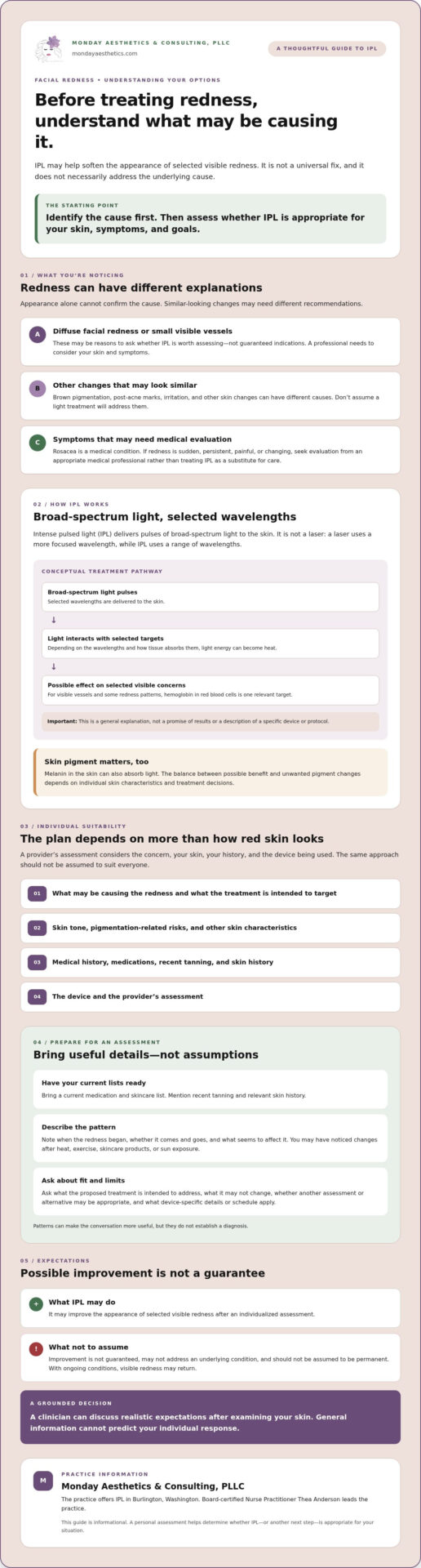
Intense pulsed light (IPL) is a broad-spectrum light treatment that delivers selected wavelengths to the skin. Unlike a laser, which uses a more focused wavelength, IPL uses a range of wavelengths. It can address selected visible skin concerns, but whether it’s suitable depends on what is causing the change in appearance. The Intense pulsed light overview explains the technology and its uses in more detail.
For someone considering IPL treatment for redness, the first question isn’t simply how red the skin looks. It’s what the redness may represent. A cosmetic treatment may soften the appearance of selected concerns, but it doesn’t diagnose a condition or necessarily address its underlying cause.
Which redness concerns might prompt an IPL consultation?
Diffuse facial redness or small visible vessels may be reasons to ask whether IPL is worth assessing. They aren’t guaranteed indications, and appearance alone can’t confirm the cause. Rosacea, for example, is a medical condition. A qualified professional needs to consider your symptoms and skin before deciding whether IPL is appropriate.
Redness can also be confused with brown pigmentation, post-acne marks, irritation, or other changes. These concerns may look similar at a glance but have different causes and may call for different recommendations. Describe what you’re noticing instead of assuming a light treatment will address it.
Why identifying the cause of redness comes first
A careful assessment considers details that a photograph or quick glance may miss: when the redness began, whether it comes and goes, what seems to trigger it, and whether you’ve noticed other symptoms. A skin examination and health history can help determine whether IPL is reasonable, whether another next step may be more appropriate, or whether further medical evaluation should come first.
Make a note of patterns you’ve observed, such as changes after heat, exercise, skincare products, or sun exposure. These details don’t establish a diagnosis, but they can make the conversation more useful. If redness is sudden, persistent, painful, or changing, seek evaluation from an appropriate medical professional rather than treating IPL as a substitute for care.
The goal is an informed recommendation, not a predetermined procedure. Ask what concern the treatment is intended to address, what it may not change, and whether your symptoms warrant medical assessment before any cosmetic treatment is considered.
How IPL treatment for redness works, and what results depend on
IPL delivers pulses of broad-spectrum light to the skin. Depending on the wavelengths used and how tissue absorbs them, light energy can interact with selected targets and become heat. For visible vessels and some redness patterns, hemoglobin, the protein that carries oxygen in red blood cells, is one relevant target. The process is more nuanced than simply “removing redness,” and treatment must be tailored to the person and concern.
Medical centers such as UT Southwestern’s IPL photofacial treatment overview describe IPL as an option for selected skin concerns, including some forms of redness. That doesn’t mean it addresses every cause. A qualified provider should assess skin tone and pigmentation-related risks, since melanin in the skin can also absorb light. The balance between possible benefit and unwanted pigment changes depends on individual skin characteristics and treatment decisions.
What influences the treatment plan?
Two people with facial redness may have different patterns, histories, and skin responses. Before deciding whether IPL is appropriate, a provider considers these differences, along with medical history and the device being used. Device characteristics matter, but a particular device or protocol shouldn’t be assumed to suit everyone.
What results can you reasonably expect?
Response can vary with the redness pattern, skin characteristics, medical history, device, and provider assessment. A clinician can discuss realistic expectations after examining your skin, but general information can’t predict your individual response.
IPL may improve the appearance of selected visible redness, but improvement isn’t guaranteed, doesn’t necessarily address an underlying condition, and shouldn’t be assumed to be permanent. With ongoing conditions, visible redness may return. Understanding that distinction helps keep the decision grounded in your goals and health, rather than a promise of correction.
If you’re considering IPL in Burlington, a personal assessment can help clarify whether it may be suitable and what questions remain. You can learn more about IPL at Monday Aesthetics before discussing your individual concerns with the practice.
Is IPL for redness safe for every skin type or concern?
No single treatment is right for everyone with facial redness. Skin tone, recent tanning, medications, skincare products, and health history can all influence whether IPL is appropriate and how risks are considered. Because skin pigment can also absorb light energy, a provider should assess pigmentation-related risks rather than rely on a simple online checklist or assume a treatment suitable for someone else will suit you.
Safety also depends on the concern being treated and the device and approach used. IPL can cause temporary skin reactions, such as redness or swelling, and less common complications may include burns, scarring, or changes in pigmentation. Possible effects and aftercare depend on the specific treatment. Ask the treating clinic to explain its risks, protocols, and aftercare instructions.
What to share during an assessment
Give the provider a complete picture, including relevant skin or medical conditions, medications, skincare products, and recent sun exposure or tanning. Mention active irritation, infection, or symptoms you can’t explain. These details don’t automatically determine whether treatment is possible, but they may affect timing, suitability, or whether medical evaluation should come first. Don’t stop prescribed medication or change your skincare routine without appropriate guidance.
How IPL compares with other approaches
Different causes and goals may call for different options. Depending on the assessment, a clinician might discuss topical care, IPL, or another medically appropriate approach. For patients exploring comprehensive aesthetic options, practices like Inly Skin Care Clinic emphasize evaluating non-surgical treatments based on individual skin goals. IPL is a light-based option for selected visible concerns; topical treatments may be recommended for other reasons, including managing an underlying skin condition. Don’t choose an approach solely because redness is present.
It also helps to distinguish redness from texture concerns. Acne scarring, for instance, isn’t the same concern as visible redness and may need a separate discussion. This overview of microneedling for acne scars relates to texture and scarring, not a recommendation for treating redness.
Before deciding on IPL treatment for redness, ask what the assessment suggests may be causing your symptoms, what the proposed treatment is intended to address, and what alternatives or limitations you should understand. A measured conversation can help you weigh potential benefits against risks without feeling pressured to proceed.
How to prepare for an IPL consultation and treatment
A considered plan begins before the treatment room. For IPL treatment for redness, preparation means giving the provider a clear picture of your skin and getting instructions tailored to your situation. The treating clinic’s directions should take priority over general advice, since preparation and aftercare can depend on the device, your skin, and the assessment.
Bring useful details and questions
Before your appointment, gather a current list of medications and skincare products, including anything you use occasionally. Note when the redness began, whether it changes, and any triggers or symptoms you’ve observed. Share recent sun exposure, upcoming outdoor plans, and relevant skin or medical history. These details can help the provider consider suitability and timing.
Use the conversation to understand the proposed plan, not simply to confirm that treatment is available. Consider asking:
- Who will assess and perform the treatment, and what relevant training or credentials do they have?
- What concern is the treatment intended to address, and what is unlikely to change?
- What reactions or risks should I understand, and what alternatives might fit my concern?
- What should I expect during recovery, and when should I contact the clinic with a concern?
- Which device would be used, and what follow-up or schedule, if any, is being proposed?
Specific answers should reflect your assessment. If anything is unclear, ask for an explanation before deciding whether to proceed.
Confirm preparation and recovery instructions
Ask the provider for individual pre-treatment and aftercare directions. Don’t assume you need to pause a particular product or avoid sun exposure for a set period based on advice written for someone else. Discuss your skincare routine, medications, recent tanning, and upcoming sun exposure or important events. Confirm what to do if your skin becomes irritated before the appointment, and whom to contact if a reaction concerns you afterward.
Keep the treatment goal in view. IPL is one possible approach for selected visible concerns, while texture or scarring may call for a different discussion. For example, microneedling with HA serum is a separate skin-rejuvenation approach, not a substitute recommendation for redness.
If you’re considering IPL in Burlington, you can ask Monday Aesthetics about an IPL assessment and discuss your questions with the practice before choosing next steps.
Considering IPL for redness in Burlington, WA? Start with a personal assessment
Choosing IPL is a personal decision, and a useful first conversation should make room for questions as well as possibilities. Monday Aesthetics & Consulting, PLLC, in Burlington, Washington, offers IPL among its aesthetic services. The practice is owned and operated by Thea Anderson, a board-certified Nurse Practitioner. An assessment can help clarify whether IPL may suit the redness you’re noticing and the kind of change you hope to see, without assuming treatment is right for everyone.
What a thoughtful IPL conversation should cover
Bring your observations and goals into the discussion. Describe where redness appears, how it changes, any symptoms or triggers you’ve noticed, and relevant skin or medical history. Be specific about your hopes, whether that means a softer appearance or understanding your options before deciding. A careful conversation can help distinguish what IPL might address from what needs another approach or further evaluation.
Ask what the recommendation is based on, which device would be used, and its intended role for your concern. Confirm device details, candidacy, and any treatment plan with the clinic rather than assuming them from general information. You can also ask about possible reactions, recovery, alternatives, and realistic results. A considered recommendation should reflect your individual assessment, not promise a particular outcome.
A low-pressure next step for Skagit Valley patients
For people in Burlington and nearby communities, a local conversation can be a practical way to get clear answers. Whether you’re in Sedro-Woolley, Mount Vernon, Stanwood, Arlington, Marysville, Bellingham, Lynden, Everett, Anacortes, Oak Harbor, or La Conner, you can ask whether an assessment is appropriate, what information to bring, and what treatment details the practice can explain before you decide. It’s reasonable to take time to consider the answers; exploring IPL doesn’t commit you to proceeding.
If you’re weighing IPL treatment for redness, begin with the questions that matter to you: Is the concern suitable for assessment? What does the clinic know about the device and its approach? What are the potential benefits and limitations in your case? A calm, individualized discussion can help you decide on an informed, unpressured next step.
Explore IPL at Monday Aesthetics and contact the Burlington practice to ask about candidacy, treatment details, or whether an appointment may be appropriate.
Make Your Next Step an Informed One
IPL may help improve the appearance of selected forms of visible redness, but it isn’t right for every concern or skin type. The cause of redness, your skin characteristics, health history, and treatment approach all matter. Results can vary, and cosmetic improvement shouldn’t be mistaken for a diagnosis or a cure for an underlying condition.
A personal assessment gives you space to describe what you’re noticing, ask what IPL treatment for redness may realistically address, and understand possible risks, preparation, and aftercare before deciding. You don’t need to feel certain about treatment before asking questions.
Monday Aesthetics & Consulting offers IPL in Burlington, Washington. The practice is owned and operated by Thea Anderson, a board-certified Nurse Practitioner. If you’re considering IPL, explore IPL at Monday Aesthetics and ask about candidacy and treatment details.
Take the time you need to find an approach that feels appropriate, informed, and aligned with your goals.
Frequently Asked Questions
Can IPL treatment help with facial redness or visible blood vessels?
It may improve the appearance of selected patterns of facial redness or small visible vessels, but it won’t suit every cause. IPL light can interact with targets associated with redness, including hemoglobin in blood vessels. Whether that makes sense for your skin depends on an assessment of the concern and your skin characteristics. Ask what the proposed treatment is intended to address and what it may not change.
Is IPL safe for every skin tone and skin type?
No. IPL isn’t automatically suitable for every skin tone or skin type. Skin pigment can also absorb light energy, so skin tone and the risk of pigmentation changes need to be considered. Recent tanning, medications, skincare products, and skin history may affect the assessment as well. Share these details with a qualified provider, who can discuss your individual suitability rather than relying on a general online checklist.
How many IPL treatments for redness might I need?
The number varies with the redness pattern, skin response, and clinical assessment, so a universal session count isn’t reliable. General guidance often describes a series of three to five treatments for diffuse redness or rosacea, while visible small vessels may need fewer, but these aren’t a prediction or a clinic-specific schedule. Ask the treating provider what they recommend for your concern, why, and how progress would be reviewed.
What does IPL treatment for redness feel like, and is there downtime?
People may experience warmth or brief snapping sensations during treatment, but how it feels varies. Temporary redness or swelling can occur afterward, and recovery isn’t identical for everyone. The device, approach, and individual skin response all matter. Before proceeding, ask the clinic what sensations and reactions to expect with its specific treatment, how to care for your skin afterward, and when to contact the clinic about a reaction.
What should I avoid before or after IPL treatment?
Follow the treating clinic’s instructions rather than applying a universal rule about sun exposure, skincare products, or medication. Tell the provider about recent tanning, upcoming outdoor plans, prescriptions, and products you use, then ask whether anything should be changed and when. Don’t stop prescribed medication on your own. Request clear written guidance for preparation and aftercare, including what to do if your skin becomes irritated before treatment.
Can IPL treat rosacea, or does it only improve visible redness?
IPL may reduce visible redness in selected cases, including some redness associated with rosacea, but it doesn’t cure rosacea or necessarily address its underlying causes. Rosacea is a medical condition, and different patterns or symptoms may call for different care. A qualified professional can assess whether IPL fits your concern or whether another medical approach should be discussed. Keep expectations focused on possible cosmetic improvement, not a guaranteed resolution.
When should redness be assessed by a medical professional instead of treated cosmetically?
Seek medical evaluation for redness that is sudden, persistent, painful, changing, or unexplained before considering cosmetic treatment. An assessment can help clarify the cause and whether IPL is appropriate or further care is needed. Monday Aesthetics & Consulting is located in Burlington and serves nearby communities including Sedro-Woolley, Mount Vernon, Stanwood, Arlington, Marysville, Bellingham, Lynden, Everett, Anacortes, Oak Harbor, and La Conner. Its board-certified Nurse Practitioner, Thea Anderson, owns and operates the practice.