
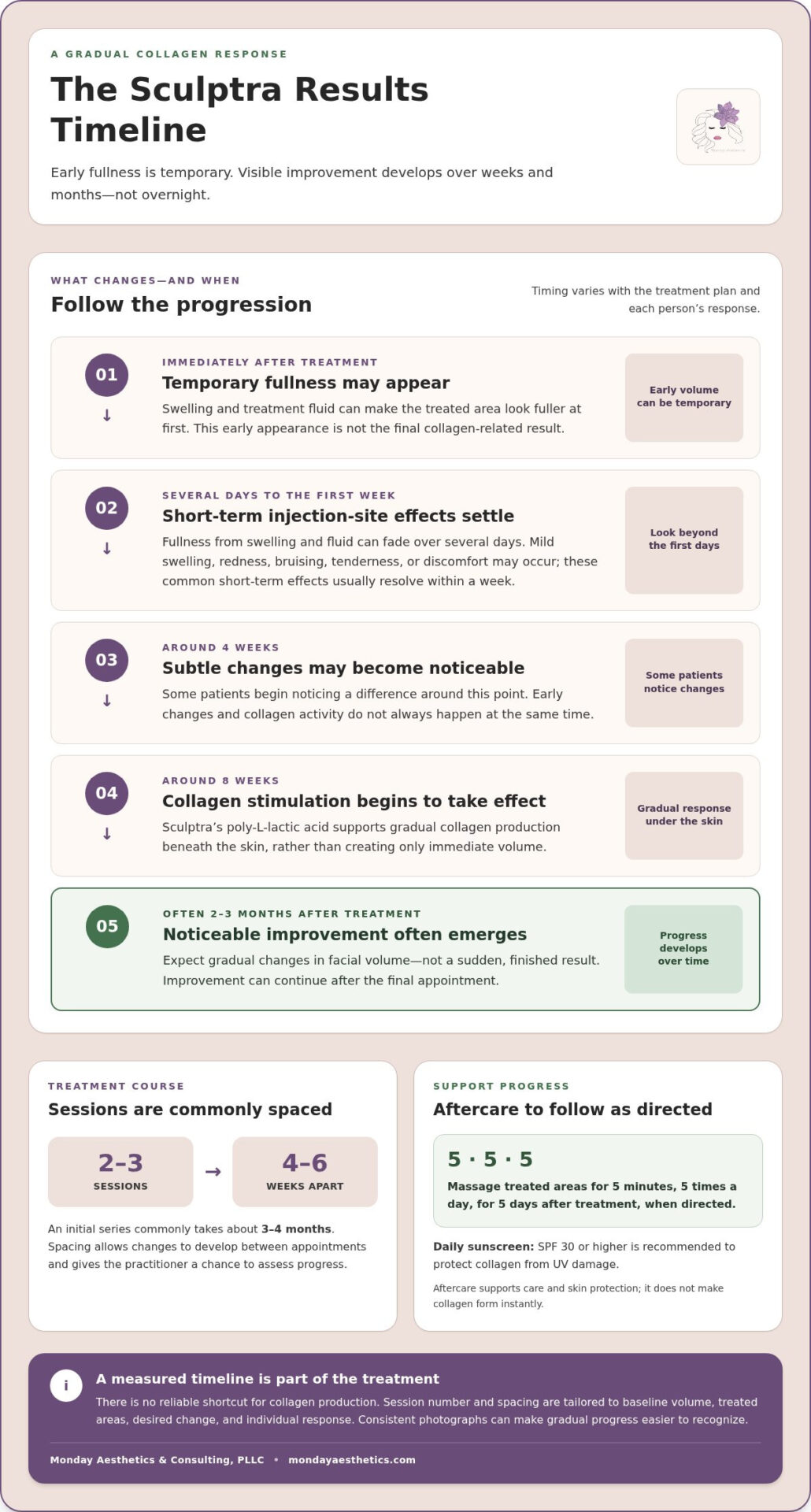
Sculptra’s changes are gradual, not immediate. The Sculptra results timeline typically begins with subtle changes around four weeks, while noticeable improvement often appears 2-3 months after treatment. Early fullness can come from temporary swelling and treatment fluid, then fade over several days.
If you’re watching the mirror for a quick change, the Sculptra results timeline can feel uncertain. That’s understandable: early fullness may appear before the longer-term collagen response begins.
This article explains when changes may emerge, why early fullness doesn’t show the final result, and how aftercare supports progress. You’ll also learn how sessions are commonly spaced and why results develop gradually, so you can set realistic expectations and know what to look for.
Key Takeaways
- Noticeable improvement often develops over 2-3 months, rather than appearing immediately after treatment.
- A treatment plan commonly includes 2 to 3 sessions spaced 4 to 6 weeks apart, with timing tailored to your needs.
- Early fullness can be temporary as swelling and treatment fluid settle over several days.
- Following the 5-5-5 massage guidance supports aftercare: five minutes, five times a day, for five days after treatment.
- Results can last up to two years with a full treatment plan, and maintenance may help support lasting facial volume.
How long does it take for Sculptra to show results?
Some patients begin noticing changes around four weeks after treatment, but noticeable improvement often appears 2-3 months after treatment. Sculptra’s poly-L-lactic acid works gradually beneath the skin, supporting collagen production rather than creating only immediate volume. The pace varies with the treatment plan and each person’s response.
A typical initial series includes 2 to 3 sessions, usually spaced 4 to 6 weeks apart. This schedule allows changes to develop between appointments and gives the practitioner a chance to assess progress before planning the next session. The complete series commonly takes about 3 to 4 months, with the second session often around the second month.
Early changes and collagen activity don’t always happen at the same time. Some patients notice an initial difference around four weeks, while collagen stimulation begins to take effect at eight weeks. Improvement can continue after the final appointment, so expect gradual changes in facial volume rather than a sudden, finished result.
A consultation shapes the number and spacing of sessions around baseline volume, treated areas, and the degree of change sought. The plan also considers how the face’s structure and skin respond as collagen develops. These factors help determine whether the initial series should include 2 or 3 appointments and how progress will be reviewed.
How do Sculptra results compare with hyaluronic acid fillers? Sculptra supports gradual collagen development, while hyaluronic acid fillers provide a different approach to restoring volume. Hyaluronic acid fillers typically last 6-12 months, whereas some Sculptra patients maintain visible improvement for up to 3 years.
Who is a good candidate for Sculptra, and who should avoid it? Sculptra may suit someone seeking gradual correction of facial volume changes, including lines and wrinkles in the cheek area. It should not be used by people allergic to any ingredient in the product or with a history of keloid formation or hypertrophic scarring.
Maintenance may be part of longer-term planning. A yearly touch-up may support lasting results and help maintain facial volume. Timing depends on the original treatment series and how the improvement develops, rather than being an automatic appointment for every patient.
To track gradual progress, compare photographs taken at consistent intervals and note changes in treated areas. Your Sculptra results timeline depends on the initial series, session spacing, starting volume, and collagen response. Sculptra should be administered only by a trained healthcare practitioner, who can monitor your treatment plan as changes emerge.
How to make Sculptra work faster?
There’s no reliable shortcut for collagen production. Sculptra stimulates the body’s gradual response, so adding treatment to speed up the process isn’t a sound approach. Instead, protect the developing result and follow your aftercare plan. Progress is measured, not overnight.
Time is part of treatment. Notice subtle changes as they develop instead of judging the outcome in the first few days. Early fullness can fade as collagen-related improvement continues over weeks and months. Take photographs in consistent lighting and from similar angles. Comparing them over time makes gradual changes easier to recognize than daily mirror checks.
Aftercare also matters. Follow the massage instructions provided for your treatment, including the 5-5-5 protocol when directed: massage treated areas for five minutes, five times a day, for five days after treatment. Daily sunscreen with SPF 30 or higher is recommended to protect collagen from UV damage. These steps support care and skin protection; they don’t make collagen form instantly.
How long do results last? Sculptra results can last up to two years with a full treatment plan, and some patients retain results longer. Another estimate places results at 1.5 to 2 years after the initial treatment series. Duration varies with the completed plan, treated areas, and each person’s response. These timeframes describe gradual results, not a promise of identical longevity for everyone.
Some estimates describe results lasting 2 to 2.5 years after the final treatment session. The different ranges use different starting points, such as the initial series or the final appointment, so they shouldn’t be treated as contradictory guarantees. Maintenance can be discussed as visible improvement changes over time. A yearly touch-up may support lasting results and help maintain facial volume.
Traditional fillers work differently, and their timelines shouldn’t be used to judge Sculptra. Hyaluronic acid fillers typically last 6-12 months, while Sculptra’s gradual collagen response can support longer-lasting improvement. Avoid comparing treatments by speed alone. The most useful measure is whether the approach suits your goals for volume, pace, and maintenance.
For a personalized discussion of how Sculptra fits your goals, explore Sculptra treatment planning. A medical assessment can consider your treatment history, desired change, and the timing of any maintenance. The aim is a thoughtful plan that respects the gradual nature of collagen development, rather than trying to force a faster result.
Temporary swelling and early fullness after injections
Swelling and fullness can affect how facial volume looks immediately after injections. Early appearance isn’t the same as the gradual improvement that develops during the treatment series.
First-Week Swelling and Bruising
During the first week, mild swelling, redness, bruising, tenderness, or discomfort may occur around injection sites. These common short-term effects usually resolve within a week. For example, a small bruise near a treated cheek can temporarily make one side look different. Note when symptoms begin and how they change to distinguish an early injection-site response from later facial changes.
Temporary Fullness After Injections
Initial fullness can reflect swelling and the water used during treatment, rather than lasting restored facial volume. That water is absorbed within 2 to 5 days after treatment, and temporary fullness usually settles over several days. As it fades, the face may look closer to its pre-treatment appearance. This doesn’t mean the longer-term collagen response has disappeared; the two processes unfold on different schedules.
During the first week, injection sites may feel tender or show redness, itching, or bruising. Common Sculptra side effects include swelling, tenderness, redness, pain, bruising, bleeding, itching, and lumps at injection sites. Even slight swelling can affect facial contours in photographs. Compare images after the initial swelling settles, rather than treating the first day’s appearance as the final result.
It helps to separate temporary fullness from the purpose of a Sculptra series. Sessions are typically spaced 4 to 6 weeks apart, allowing time between appointments for the early reaction to settle. The initial fullness isn’t a reliable measure of how much lasting volume the treatment will restore. Later improvement develops gradually, so a brief change in appearance during the first several days should be considered separately.
When should I contact a provider about Sculptra side effects or complications? Contact your treating practitioner about concerning symptoms, including lumps or swelling, redness, or tenderness that persists beyond a week. Sculptra should not be injected into blood vessels because this can cause vascular occlusion, infarction, or embolic phenomena. Suspected complications require prompt medical attention.
For a clear record, note the treatment date and photograph any bruising or swelling in consistent lighting. If another session is planned weeks later, share these observations at follow-up. This context helps distinguish a temporary injection-site effect from changes that develop as collagen production progresses.
Aftercare and the 5-5-5 massage protocol
Aftercare supports a considered recovery after Sculptra, while collagen stimulation develops gradually. The central routine is the 5-5-5 massage protocol: massage treated areas for five minutes, five times a day, for five days after treatment. Follow the specific instructions provided for your treatment rather than adding extra massage sessions or pressure.
The three fives make the routine easy to remember, but refer to different parts of care: five minutes per massage, five times daily, for five days after treatment. If you’re unsure which areas were treated, follow your treatment instructions for where massage applies. Don’t continue the routine beyond the advised period without guidance.
Massage is an aftercare measure, not a way to force immediate firmness or speed up the body’s response. Sculptra works through gradual collagen production, so the five-day routine doesn’t mean visible results will appear within five days. Temporary fullness may change as treatment fluid is absorbed, while collagen-related improvement develops on a different timeline.
Consistency matters more than intensity. Follow the five-minute intervals as directed and track each session across the five-day period. If massage causes concern or you’re unsure of the technique, contact your treating practitioner for clarification instead of changing the pressure or duration yourself. This keeps aftercare aligned with your treatment.
Daily sun protection is another practical part of skin care. Daily sunscreen with SPF 30 or higher is recommended to protect collagen from UV damage. Make it part of your regular routine, not only the five days of massage. Sunscreen supports collagen protection, while massage follows its own brief, post-treatment schedule.
Aftercare also means observing changes without treating every early fluctuation as the final result. Note the treatment date and follow the massage instructions for each appointment in a series. If sessions are spaced weeks apart, each treatment has its own five-day massage period. Keep the dates distinct so you follow the right instructions after each visit.
- Massage: five minutes per session, five times daily, for five days after treatment.
- Sun protection: use daily sunscreen with SPF 30 or higher.
- Tracking: record treatment dates and follow the instructions for each session.
For longer-term tracking, take consistent photographs every 3 months after the Sculptra series. Similar lighting and angles make gradual changes easier to compare. Those photographs help you observe collagen-related progress over time; they don’t replace the five-day aftercare routine or make the injectable work faster.
The gradual Sculptra results timeline
Sculptra changes unfold over several weeks and months as collagen develops. During weeks 1-4, visible changes are often minimal, so early photographs may not show the improvement you’re seeking. The practical takeaway is simple: assess the treated areas over time, not just during the first days after injections.
Some patients notice subtle firmness or a healthier glow around week three. These early signs may be slight, and swelling can still affect facial contours. By the second month, collagen production is underway, and subtle changes in facial volume may appear. This is a developing response, not an immediate, fully formed result.
Months three and four often bring more noticeable improvement. Gradual changes may become easier to see in areas affected by volume loss. Compare photographs taken in similar lighting and from similar angles. Consistent images help distinguish lasting contour changes from differences in expression, posture, or camera position.
Timing also relates to the treatment series. A typical initial plan includes 2 to 3 sessions, spaced 4 to 6 weeks apart, over about 3 to 4 months. Because appointments may continue while collagen develops, the overall timeline doesn’t begin and end with one injection date. Keep track of each session when reviewing changes across treated areas.
After treatment, collagen production may reach its peak 4-6 months later, while Sculptra results often peak 5 to 6 months after treatment. Optimal results are generally seen three to four months after the last appointment. These milestones describe different points in a gradual process. The date of the final session helps provide context for understanding your own progress.
Changes may continue through the first year, including months 7-12 and beyond. Results are described as holding strong during months seven through twelve, even as gradual collagen-related improvement can keep developing. This longer view matters: a stable appearance across those months can be part of the expected progression, rather than a sign that the treatment stopped working.
To make the timeline easier to follow, take consistent photographs every 3 months after the Sculptra series. Compare the same facial areas and note changes in contour, firmness, and volume. This gives you a steadier record than checking daily, when subtle shifts can be hard to see. For an individualized discussion of your progress and treatment plan, schedule a Sculptra consultation.
Monday Aesthetics & Consulting, PLLC: Botox
Monday Aesthetics & Consulting, PLLC offers Sculptra, a biostimulator that supports gradual collagen development over several months. If you’re considering Sculptra alongside other options, a personalized conversation can help clarify which treatment fits your goals and preferred pace. The practice also offers Botox, dermal fillers, microneedling with HA serum, and laser hair removal for different aesthetic concerns.
Botox may be relevant if you’re exploring options beyond gradual collagen-focused treatment. The right choice depends on your priorities, the areas you want to address, and your preferred treatment approach. Discuss your goals and treatment history as part of planning.
For a thoughtful conversation about your options, contact Monday Aesthetics & Consulting, PLLC.
Choose a pace that feels right for you
Use what you’ve learned about the Sculptra results timeline to guide a thoughtful conversation about your aesthetic priorities. Consider which changes matter most, whether gradual progress fits your preferences, and what you’d like to understand before choosing a treatment. Clear goals make it easier to discuss options without rushing toward a particular result.
Monday Aesthetics & Consulting, PLLC offers Sculptra, Botox, dermal fillers, and microneedling with HA serum. These treatments address different aesthetic concerns, so a conversation can help you explore which approach aligns with your goals and preferences.
There’s value in choosing care that respects your features and your own sense of timing. If you’re ready to discuss your goals, contact Monday Aesthetics & Consulting, PLLC. A considered next step can help you move forward with clarity and confidence.
Frequently Asked Questions
What happens after 8 weeks of Sculptra?
At eight weeks, collagen stimulation is beginning to take effect, so changes may become easier to notice over time. This is part of the developing response, not necessarily the final appearance. Compare treated areas with earlier photographs taken in similar lighting, looking for gradual shifts rather than a sudden change. Record each injection date, especially if your treatment series includes multiple appointments.
How Many Treatments Will You Need?
A typical initial Sculptra treatment series includes 2 to 3 sessions, though the number is shaped by the areas treated and the desired degree of improvement. For example, someone addressing broader facial volume changes may have a different plan from someone focusing on a localized concern. Sessions are commonly spaced 4 to 6 weeks apart. The full series often spans about 3 to 4 months, making it helpful to plan around that gradual schedule.
How long does Sculptra last?
Sculptra results can last up to two years or more with a full treatment plan. The gradual effect comes from collagen development rather than a temporary change alone. Longevity describes how long improvement remains visible, not a fixed date when results suddenly disappear. To track changes, compare photographs over time and note when facial volume begins to differ from your preferred result.
How often do I need Sculptra maintenance?
A yearly touch-up may support lasting results and help maintain facial volume. Maintenance timing depends on your completed series and the changes you observe, rather than being an automatic appointment. Consistent photographs, for example, can help you see whether treated areas still meet your goals. Discussing those comparisons at follow-up gives your treatment plan a clear reference point for considering maintenance.
What Can Impact the Number of Sculptra Treatments?
The treatment area, existing volume loss, desired change, and individual collagen response all shape the number of sessions. A plan for cheek-region contour concerns may differ from one addressing several facial areas. Age can also influence response: patients in their 30s and 40s tend to have a more robust collagen response than patients in their 60s and beyond. These factors help explain why treatment plans are individualized rather than identical.
What Results Can You Expect Over Time?
Expect gradual changes, with subtle firmness or a healthier glow sometimes noticeable around week three. Around month two, small volume changes may emerge, and improvement may become more apparent during months three to four. Comparing cheek photographs, for example, may reveal contour changes that daily mirror checks miss. Results can continue developing into the first year, so keep a consistent record of treated areas.
How long does it take to see Sculptra results?
Some patients begin noticing changes around four weeks after treatment, while noticeable improvement often appears 2-3 months afterward. The early days can be misleading because temporary swelling or fullness may affect appearance before collagen-related changes become visible. If you’re assessing progress, compare photographs from the same angle and lighting rather than relying on one image. This makes subtle changes easier to distinguish from ordinary differences in expression or camera position.
What should I expect after each Sculptra injection?
The Sculptra results timeline begins with the immediate post-injection period, when temporary fullness may occur. During weeks 1-4, visible changes are often minimal; subtle changes may emerge around week three, with collagen activity underway around month two. Improvement can become more noticeable in months three to four, then continue developing. Since sessions may be spaced several weeks apart, record each treatment date to interpret changes in context.