
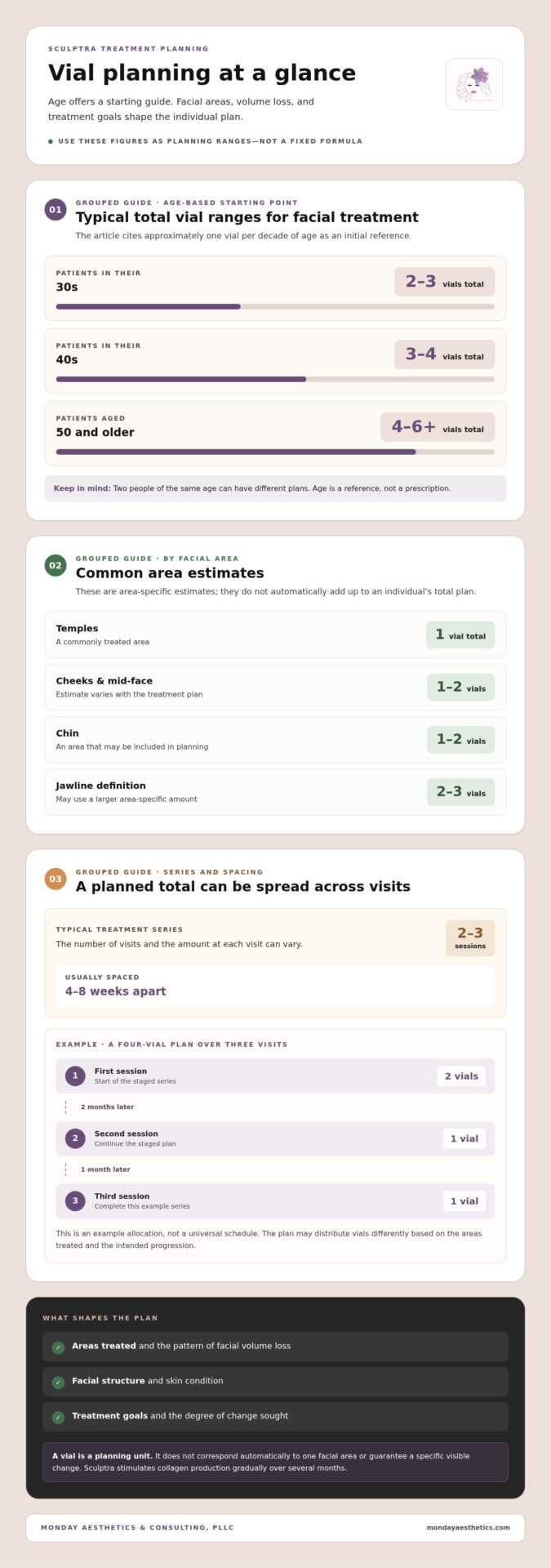
A useful starting point is about one Sculptra vial per decade of age, but the right amount depends on the areas being treated and the degree of volume loss. For facial treatment, people in their 30s may typically need two to three vials in total, those in their 40s three to four, and those aged 50 and older four to six or more. If you’re wondering how many Sculptra vials for your face, think of these figures as a planning guide rather than a fixed formula.
It’s natural to want a clear number before considering treatment, especially when results develop gradually. A vial is one part of a personalized plan, and the total may be divided across sessions to address areas such as the cheeks, temples, or jawline. The amount also depends on facial structure, skin condition, and aesthetic goals.
This article explains what a Sculptra vial represents, how needs can differ by facial area, and what to expect from a treatment series. You’ll also learn how long results may last, helping you consider timing and approach treatment with realistic expectations.
Key Takeaways
- Use the age-based vial guideline as a starting point, then consider how treatment goals and facial areas shape the plan.
- See how a Sculptra series can be spaced across sessions rather than given all at once.
- Compare typical vial needs for areas such as the temples, cheeks, and jawline.
- Understand when results develop and how long they may last before maintenance is considered.
- Learn how Botox addresses dynamic wrinkles differently from Sculptra’s gradual collagen stimulation.
What Does a Vial of Sculptra Actually Represent?
A vial is a planning unit, not a fixed measure of facial correction. Age may offer an initial reference, but facial volume loss and treatment goals shape the overall plan.
The Per-Decade Vial Guideline
The commonly cited guideline is approximately one Sculptra vial per decade of age. It gives readers a starting point, not a precise prescription for every face. For example, patients in their 30s may typically need two to three vials in total, while patients aged 50 and older may need four to six or more. These ranges help frame a conversation about treatment scale.
Facial Volume Loss and Vial Planning
Facial volume loss affects vial planning because the plan reflects which areas are being treated and the degree of change sought. Age alone cannot show where volume has shifted or how much support a face needs, so two people of the same age may have different plans. This distinction matters when seeking a subtle result that respects individual facial appearance.
Each Sculptra vial represents one unit of product within a broader treatment plan. It does not automatically correspond to one facial area or guarantee a particular visible change. Sculptra stimulates collagen production over several months, so the vial count relates to gradual treatment, not an instant volume result. Consider the planned amount alongside the areas treated and the desired change.
For a person in their 30s, one example begins with three vials at the first treatment. The second and third treatments may each use one to two vials, with sessions spaced eight weeks apart. That example illustrates how a total plan can build over time. It doesn’t mean every person in their 30s needs the same number or schedule.
Pricing depends on the individual treatment plan and is given after a quote request. Vial count, treated areas, and session structure affect the total; a series package reflects those same planning choices. A vial estimate alone therefore cannot establish the cost of a complete course.
Use the age guideline as an orientation, then consider volume loss and treatment goals together. A person in their 50s may be estimated at four to six or more vials, while a person in their 30s may fall around two to three. Those examples show why age can frame a discussion, but the face itself guides how treatment is planned. The amount is best understood as part of a considered series, not a stand-alone number.
How Many Vials of Sculptra Are Needed?
Vial counts are generally planned across a series rather than as a single-session total. The number and spacing of visits shape how treatment is distributed.
Vial Distribution Across Sessions
Vial distribution means dividing the planned amount among visits instead of using it all at once. People asking how many Sculptra vials for face treatment may involve should consider both the series total and the amount used at each appointment. One example starts with two vials, followed by one to two at the second session. This distinction makes the overall plan easier to understand.
Session Frequency and Spacing
Most patients typically need two to three sessions, with treatments spaced four to eight weeks apart. This creates a measured rhythm rather than compressing visits together. The number of appointments and the spacing determine how the planned vial total is delivered. To understand how many Sculptra vials for face treatment a series includes, consider the full course, not just the first visit.
Staging Treatment Over Time
Staging means spreading injections across separate appointments to build treatment progressively. One example uses two vials at the first session, one vial two months later, and another vial a month after that. This illustrates how a four-vial plan can extend across three visits rather than using the total at the first appointment. The intervals and allocation describe this example, not a universal schedule.
The areas treated help determine how vials are divided. A plan focused on the cheeks may distribute product differently from one addressing several facial areas. The total and allocation reflect treatment goals, the pattern of volume loss, and the chosen areas. When asking how many Sculptra vials for face treatment may involve, ask how the total is spread across visits, too.
Sculptra stimulates collagen production gradually, so sessions are part of a longer process. Hyaluronic acid fillers, by contrast, provide immediate results by adding volume beneath the skin. This difference matters when considering timing: a staged Sculptra series is planned around gradual change, while immediate volume is a different treatment effect.
Spacing gives the series a clear structure. Sessions four to eight weeks apart can be arranged around the intended progression. The amount used at each visit need not be identical, and the allocation can reflect the areas treated during that appointment.
To understand how a series could be arranged around your facial goals, explore Sculptra treatment planning. Consider both the complete vial total and its distribution across appointments when reviewing a treatment plan.
Which areas does Sculptra treat?
Sculptra planning considers the facial areas being treated, the desired change, and maintenance. Its gradual collagen-stimulating approach differs from fillers that add volume directly.
Commonly treated areas include the temples, cheeks, jawline, and chin. A temple treatment may use one vial total, while jawline definition may require two to three vials. Cheek and mid-face treatment generally uses one to two vials, and the chin may require one to two. These estimates can help frame a consultation, but they do not automatically add up to an individual’s total plan.
Sculptra is not used in the forehead or lips. If your main goal concerns either area, treatment planning should focus on appropriate options for that concern. Hyaluronic acid fillers are a different treatment category and provide immediate volume, while Sculptra works gradually to stimulate collagen.
A consultation connects the treatment area with facial structure, volume loss, and the desired appearance. For example, someone seeking cheek support and jawline definition needs a plan that considers both areas, rather than treating a single vial estimate as the complete answer. Product distribution can be tailored across selected areas and sessions, with facial balance in mind.
After Sculptra treatment, follow the specific massage instructions provided for your treatment. The timing and technique should come from those instructions rather than a general routine. This keeps aftercare aligned with the treatment plan, including the areas addressed and how the product was placed.
In the United States, Sculptra was FDA-approved in 2004 to treat facial lipoatrophy in people living with HIV. That approval describes a specific use; product labeling and its safety information are relevant when considering treatment. It does not, by itself, explain every cosmetic treatment decision or individual plan.
Using more vials than a treatment plan calls for can produce an unbalanced appearance, while incorrect injection placement can lead to an unintended result. Both the amount and placement matter, so a vial count alone cannot establish whether treatment is appropriate or well distributed. Clear planning for each area helps make those decisions more deliberate.
Maintenance is another part of planning. Sculptra maintenance treatments are often recommended every 18 to 24 months and may involve one to two vials. The timing and amount relate to how the gradual effect changes over time, rather than following a fixed schedule for every face. A maintenance plan can therefore revisit the original areas and goals instead of automatically repeating the initial treatment.
How long results may last
Sculptra results develop gradually as collagen production increases, so the first appointment is not the final measure of change. The gel carrier’s immediate volume begins to fade within a few days. Collagen stimulation takes longer, and facial results are generally assessed after three to four months, once collagen production has stabilized. This timeline distinguishes temporary early fullness from the gradual result.
Timing matters across the full series, too. Full results are typically visible three to four months after the final session, not immediately after the first appointment. If you complete several sessions, consider this later assessment point from the end of treatment. It gives the gradual process time to become visible before you judge the overall change.
Sculptra results commonly last 18 to 24 months before maintenance is needed, and results can last up to two years or longer. Another way to express the expected range is 1.5 to 2 years. These estimates describe a broad duration, not a precise expiration date. They can help with longer-term planning, including when to revisit facial volume and the desired appearance.
Maintenance is often considered every 18 to 24 months and may involve one to two vials. That interval gives patients a reference point for planning beyond the initial sessions. It doesn’t mean every person will return at the same time or use the same amount. The facial areas treated and the way results change over time inform the next treatment plan.
Dermal fillers follow a different timeline. Hyaluronic acid fillers typically last six to twelve months after injection, while Sculptra’s effect emerges gradually through collagen production. This distinction matters when comparing progressive change with volume added directly under the skin. Each approach has its own timeline for noticing results and considering another appointment.
Keep three points in mind: the gel carrier’s early volume fades within a few days, collagen stimulation takes time, and full results are assessed months after the final session. The result develops progressively, not at the moment of injection. Considering both the treatment series and the later assessment helps set realistic expectations for when changes become visible.
In practical terms, plan to assess the completed series at three to four months after the final session, then consider maintenance within the 18-to-24-month range. Results may last beyond two years, while some patients plan maintenance sooner. The initial appearance after an appointment isn’t a reliable picture of the later collagen-related result, so the timeline should be viewed across the full treatment course.
Recommended number of Sculptra vials for facial treatment
A complete facial Sculptra series typically uses two to six vials, with five vials as one typical overall plan. Most patients need two to four vials per session. When estimating how many Sculptra vials for face treatment may involve, distinguish the total series amount from the amount used at one appointment. These figures describe different parts of a plan, not a fixed amount for everyone.
The areas treated help shape the total. Cheeks and mid-face generally use one to two vials, while the chin may require one to two. Temples or jawline treatment may use two to four vials per area. These estimates should not be added automatically. A plan considers whether treatment covers one area or several, and the degree of improvement sought.
For example, a plan focused on the cheeks may distribute vials differently from one addressing both temples and jawline. Someone seeking subtle change may have different needs from a person addressing more significant volume loss. The plan also considers how injections will be divided across sessions, rather than assuming every area receives the same amount. The intended effect and treatment areas guide the total.
Facial and body treatments use different amounts, so their vial totals should not be compared as equivalent plans. Non-surgical buttock enhancement may require six to ten or more vials per session. Hip dips may require four to eight vials, while knees may require two to four, depending on surface area. A Sculptra Liquid BBL typically starts at ten vials, distributed across three to four sessions. These examples show how the treated area affects the amount; they do not establish a facial recommendation.
Area-specific estimates help frame a treatment plan, but do not establish a complete course. The number of facial areas, degree of volume loss, desired effect, and session structure all inform the total. When asking how many Sculptra vials for face treatment may require, consider both the full series and the allocation at each appointment. This prevents a per-area estimate from being mistaken for the total facial amount.
The price depends on the case and is given after a quote request; treated areas, vial count, and session structure affect it. To discuss a facial plan shaped around your goals, plan your Sculptra treatment.
Monday Aesthetics & Consulting, PLLC: Botox
Monday Aesthetics & Consulting, PLLC offers Botox for people whose concerns center on dynamic wrinkles rather than facial volume. Botox relaxes facial muscles to reduce movement-related lines; it does not add volume or replace Sculptra’s gradual collagen-stimulating approach.
If your priority is restoring volume, Sculptra or dermal fillers may be more relevant treatments to discuss. Matching a treatment to your concern means distinguishing between muscle movement, facial volume, and other aesthetic goals. A thoughtful plan starts with the change you want and the approach designed to address it.
For information about Botox, Sculptra, or other aesthetic treatments, contact Monday Aesthetics & Consulting, PLLC or visit mondayaesthetics.com.
Choose the Change That Feels Right for You
Before deciding how many Sculptra vials your face may need, consider what you hope to change and what you want to preserve. A clear priority, such as restoring facial fullness or softening movement-related lines, can make a treatment conversation more focused. The goal is not to pursue every option, but to identify the approach that aligns with your concerns and aesthetic preferences.
Monday Aesthetics & Consulting, PLLC offers Sculptra, Botox, dermal fillers, and microneedling with HA Serum. These treatments address different aesthetic concerns, so the most helpful next step is discussing the result you’re seeking and the approach that may suit it. You can bring questions about treatment goals, timing, and how to maintain a natural appearance.
Contact Monday Aesthetics & Consulting, PLLC to discuss your goals and explore a thoughtful next step. A considered plan can help you move forward with greater clarity and confidence.
Frequently Asked Questions
How Does It Work?
Sculptra works by stimulating the body’s collagen production over several months. Its active material, poly-L-lactic acid, supports gradual change rather than adding lasting volume immediately. The gel carrier can create temporary fullness after an appointment, but that early effect fades. Someone assessing facial fullness shortly after treatment is seeing an early stage, not the later collagen-related result.
How Long Do Sculptra Results Last?
Sculptra results commonly last 18 to 24 months before maintenance is considered, and results can last up to two years or longer. The gradual effect means the best time to assess the completed treatment is three to four months after the final session. If you’re planning around an event, allow time for both the treatment series and results to develop before expecting the finished appearance.
How much does Sculptra cost?
The price depends on the case and is given after a quote request. For Sculptra treatment in Burlington, Washington, cost factors include the areas treated, the number of vials in the plan, and how treatment is structured across appointments. A single-session estimate and a full-series estimate describe different scopes of care, so compare plans by what they include, not by vial count alone.
How do I know if I am a good candidate for Sculptra?
Sculptra may suit someone seeking gradual improvement in facial volume rather than immediate fullness. Start by identifying the specific concern, such as changes in the cheeks or temples, and consider whether a progressive result fits your preferences. Sculptra is not used in the forehead or lips, so goals centered on those areas call for discussion of other approaches.
How is Sculptra different than other fillers?
Sculptra stimulates collagen gradually, while hyaluronic acid fillers add volume under the skin for immediate results. This distinction can help when choosing between progressive change and visible fullness soon after an appointment. Botox works differently: it relaxes facial muscles to reduce dynamic wrinkles and does not add volume. The right treatment depends on whether your concern is volume, collagen support, or movement-related lines.
How many treatments are required?
Most patients typically need two to three Sculptra sessions, spaced four to eight weeks apart. The number of appointments determines how the planned amount is delivered. For example, a plan addressing several facial areas can distribute product over separate visits instead of using the full series amount at once. The schedule supports gradual progression.
How many Sculptra vials are typically needed for a full-face treatment?
A complete facial Sculptra series typically uses two to six vials, with five vials as one typical plan example. The full-series total differs from the amount used during one appointment. Facial areas and treatment goals shape how the vials are allocated, so consider the series total alongside its session schedule and the areas included.
How many Sculptra vials are needed per treatment session?
Most patients need two to four Sculptra vials per facial treatment session. That range does not mean every appointment uses the same amount. Depending on the areas treated and intended progression, a plan may start with a different allocation than it uses later. Review the session-by-session breakdown to understand how the total vial count is distributed.