
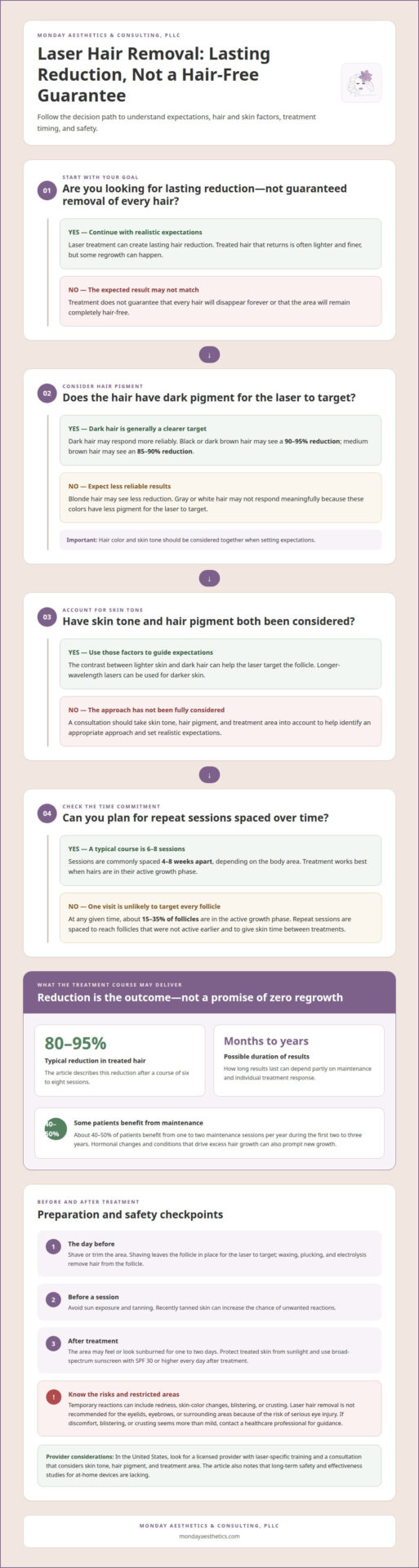
Lasting results don’t always mean every hair is gone for good. The answer to whether laser hair removal is permanent is no in the strict sense: treatment can create lasting hair reduction, but some hair may grow back, often lighter and finer. A typical course involves six to eight sessions, spaced four to eight weeks apart depending on the body area.
It’s understandable to want more than a temporary break from shaving or waxing and to ask: is laser hair removal permanent? The answer is that it can provide lasting hair reduction, but it does not guarantee that every hair will be gone forever. Results depend partly on how your hair responds to the laser, and skin tone matters because the contrast between hair and skin pigment can affect how precisely the laser targets the follicle.
Here, you’ll learn how long results may last, why regrowth can happen, and what can affect your response. We’ll also explain how laser hair removal relates to different skin tones, what side effects to understand, and how to weigh potential benefits against the commitment of a treatment series.
Key Takeaways
- Prepare for treatment by shaving or trimming the area the day before, and understand why timing matters for targeting hair in its growth phase.
- Know which temporary skin reactions can occur and how sun exposure can affect recovery.
- Set realistic expectations: lasting reduction is more accurate than expecting every treated hair to disappear forever.
- Consider how hair pigment and skin tone affect laser targeting, including why longer wavelengths can be useful for darker skin.
Is Laser Hair Removal Worth It?
Laser hair removal may be worthwhile if you want lasting reduction in unwanted hair rather than a one-time fix. A typical course involves six to eight sessions, spaced four to eight weeks apart depending on the body area.
Hair Growth Cycles and Treatment Timing
Hair grows in cycles, and laser treatment works best when hairs are in their active growth phase. At any given time, 15-35% of follicles are in that phase, so one session can’t effectively target every follicle. That’s why treatments are spaced over time. For example, an underarms schedule needs repeat sessions to reach follicles that weren’t active during an earlier visit. The interval also gives skin time between treatments.
Regrowth, Hormonal Changes, and Maintenance
Regrowth after treatment is often finer or lighter, but some hair can return. Hormonal changes and conditions that drive excess hair growth can also prompt new growth, because laser treatment doesn’t address the underlying cause. About 40-50% of patients benefit from one to two maintenance sessions per year during the first two to three years. This can matter if you’re weighing convenience against ongoing appointments. Track changes in treated areas between sessions.
Session Needs and Spacing
Most people should plan for six to eight sessions, with four to eight weeks between appointments depending on the body area. Preparation also matters: shave or trim the area the day before treatment, and avoid sun exposure and tanning before a session. Some temporary discomfort can occur during treatment. In the United States, look for a licensed provider with laser-specific training and a consultation that considers your skin tone, hair pigment, and treatment area. Laser treatment typically reduces treated hair by 80-95% after six to eight sessions, so consider whether that reduction would make your routine easier.
Side effects and risks
A good candidate often has dark hair and lighter skin, because the contrast helps the laser target pigment in hair follicles. Darker skin can also be treated with lasers that use longer wavelengths, while blonde, white, and gray hair respond less reliably.
Hair color affects how much pigment the laser can target. Blonde hair may see less reduction, while gray or white hair may not respond meaningfully. A consultation should consider skin tone and hair color together. This helps set realistic expectations and identify an appropriate approach.
Temporary side effects can include redness, skin-color changes, blistering, or crusting. The treated area may feel and look sunburned for one to two days. Sunlight can irritate healing skin and increase the risk of blisters or scars, so protect treated areas and use broad-spectrum sunscreen with SPF 30 or higher every day after treatment.
Waxing, plucking, and electrolysis remove hair from the follicle, leaving less hair for laser energy to target. Shaving doesn’t remove the follicle, so it preserves the laser’s target beneath the skin. Avoid sun exposure and tanning before treatment, since recently tanned skin can increase the chance of unwanted reactions.
Protect your eyes, too. Laser hair removal isn’t recommended for the eyelids, eyebrows, or surrounding areas because of the risk of serious eye injury. Consider at-home devices carefully, since long-term safety and effectiveness studies are lacking. If discomfort, blistering, or crusting seems more than mild, contact a healthcare professional for guidance.
Skin tone and hair pigment shape both suitability and safety. Reviewing skin tone and hair pigment considerations can help clarify what to expect before treatment.
How permanent laser hair removal results are
Laser hair removal can reduce growth for several months and sometimes years, but it doesn’t permanently remove every hair. Maintenance may help if regrowth appears. Results vary with hair pigment, skin tone, and treatment response.
How Long Results Last
Results can last from months to several years, depending partly on maintenance. The FDA’s term for the outcome is “permanent hair reduction,” meaning a lasting decrease in regrowing hairs after a full treatment series. Reduced growth may make the treatment area easier to manage, but it doesn’t guarantee that the area will stay completely hair-free.
Treated hair may shed over the following month, while follicles that weren’t effectively targeted can produce later growth. Some treated follicles may be destroyed, preventing hair from growing there again. Others may recover, so a small amount of regrowth doesn’t necessarily mean the whole treatment failed.
Result Permanence and Maintenance
Laser treatment is permanent only for follicles it destroys; the overall result is better described as lasting reduction. Hair that returns is often lighter and thinner than before. A touch-up may address noticeable regrowth, while maintenance needs depend on the treatment area and how hair changes over time.
Pigment affects how well devices target hair. Black or dark brown hair may see a 90-95% reduction, while medium brown hair may see an 85-90% reduction. Laser hair removal may be less effective on blonde, gray, or white hair because these colors have less pigment. These differences matter when setting expectations for a particular treatment area.
Skin tone also affects laser selection. Longer-wavelength lasers work best on darker skin, while the contrast between lighter skin and dark hair can make targeting easier. Hair and skin color together help explain why two people completing the same procedure may see different degrees of lasting reduction.
Laser hair removal for different skin tones
Skin tone influences how laser energy should be directed because pigment in skin and hair absorbs light. Treatment tends to work best when lighter skin contrasts with dark hair, giving the laser a clearer target in the follicle. This is why one approach doesn’t suit every complexion. Assess skin tone and hair color together.
For darker skin, longer-wavelength lasers work best. Hair pigment still matters: blonde, white, and gray hair contain less pigment for the laser to target, so treatment is less effective on those colors. A person with darker skin and dark hair needs an approach that accounts for both features. The key is targeting hair while accommodating the treated skin.
Hair removal habits also affect the available target. Waxing, plucking, and electrolysis remove hair from follicles, leaving less hair for laser energy to target. Shaving leaves the follicle in place and is commonly recommended before a session. Avoid tanning and sun exposure before treatment, since changes in skin pigment can affect planning and contribute to temporary skin reactions.
A consultation should consider natural skin tone, hair color, tanning, and the treated areas before treatment settings are selected. For example, underarms and legs can differ in hair characteristics and sun exposure, so planning should account for each area. Laser hair removal is a cosmetic option for reducing unwanted hair, not surgery, and the balance of skin pigment and hair pigment shapes its likely effectiveness. Discuss your skin tone and treatment area through a laser hair removal consultation.
Monday Aesthetics & Consulting, PLLC: Botox
Monday Aesthetics & Consulting, PLLC offers laser hair removal for people considering longer-term reduction in unwanted hair. If your skin tone or hair color raises questions about likely results, discuss those details to understand treatment suitability and set realistic expectations.
Laser hair removal can reduce hair growth, but it may not remove every hair permanently. Consider the treatment area, hair pigment, and possibility of future maintenance when deciding whether the commitment fits your routine. If your main goal is reducing hair, laser hair removal is the relevant next step; Botox is a separate aesthetic treatment.
Contact Monday Aesthetics & Consulting, PLLC or visit mondayaesthetics.com to learn more about laser hair removal.
Choose a Next Step That Fits Your Goals
If you’re still weighing whether laser hair removal is permanent, let your priorities guide your decision. Consider how you want unwanted hair to fit into your daily routine and whether a course of treatment feels right for you. Your individual response and preferences matter more than pursuing a particular ideal of smoothness.
Monday Aesthetics & Consulting, PLLC offers laser hair removal for people considering treatment. The practice also offers Botox, Dermal Fillers, and Microneedling with HA Serum for other aesthetic goals. A conversation can help you focus on the treatment that aligns with your concerns and preferred approach to care.
If you’re ready to discuss your goals, contact Monday Aesthetics & Consulting, PLLC. Take the next step at your own pace, with a clearer sense of what matters to you.
Frequently Asked Questions
Does skin or hair color make a difference?
Yes. Laser treatment depends on pigment in the hair and its contrast with the skin. Dark hair against lighter skin often gives the laser a clearer target, while blonde, gray, or white hair responds less well. Longer-wavelength lasers are used for darker skin. If skin tone and hair color differ across treatment areas, such as the face and legs, each area may need separate consideration.
Will I need multiple treatments?
Yes, a series is generally needed because follicles aren’t all in the same growth phase at once. A typical plan is six to eight sessions, with four to eight weeks between visits depending on the body area. For example, facial hair and leg hair may follow different schedules. Hair thickness, color, and density also influence the number of sessions needed.
Is laser hair removal permanent or does hair grow back?
Laser hair removal can provide lasting reduction, but some regrowth can occur. Returning hair may be finer or lighter, and a maintenance session can address noticeable regrowth. New growth may also appear if hormonal changes affect hair production. Think of the result as fewer or less visible hairs over time, not a guarantee of complete, lifelong hairlessness.
How much permanent hair reduction does laser hair removal typically provide?
After six to eight sessions, laser treatment typically reduces treated hair by 80-95%. That figure describes reduction, not complete removal, and the response varies with hair pigment, thickness, density, and treatment area. For example, dark, coarse hair may respond differently from fine, lightly pigmented hair. Consider the percentage a general expectation for a course, not a prediction for every individual.
How does laser hair removal compare with electrolysis, waxing, and IPL?
These methods work differently. Laser uses light absorbed by hair pigment, while waxing removes hair from the follicle and electrolysis is a separate hair-removal approach. IPL also uses light, but it isn’t the same technology as a laser. The key distinction is the target: pigment, individual follicles, or hair removed through waxing. Suitability depends on your hair and skin characteristics.
What are the risks and side effects of laser hair removal?
Temporary redness, skin-color changes, blistering, or crusting can occur. The treated area may feel sunburned for one to two days, and sunlight can raise the risk of irritation, blisters, or scars. Mayo Clinic recommends broad-spectrum SPF 30 or higher every day after treatment. Laser treatment near the eyelids, eyebrows, or surrounding areas isn’t recommended because of serious eye-injury risk.