
What if lasting skin care depends less on adding another product and more on a few habits you can sustain? Long term skin health is built through steady, thoughtful care, not a crowded shelf or a pursuit of flawless skin. When product advice conflicts, it can be hard to tell whether your routine is helping or simply becoming harder to maintain.
Skin changes over time. Dryness, shifts in texture, and visible signs of aging can reflect changing needs, while some new or unusual changes deserve medical attention. This guide covers practical ways to build a manageable routine, understand how skin may change with age, and recognize when it’s sensible to seek medical advice.
Professional aesthetic care can complement everyday habits without replacing them. At Monday Aesthetics in Burlington, individualized options such as professional skin care, microneedling with HA serum, SkinVive, and IPL can support personal aesthetic goals without pressure to pursue dramatic change.
Key Takeaways
- Long term skin health is supported by consistent habits that care for skin function, comfort, and resilience, not by chasing a short-term glow.
- Learn how aging and accumulated UV exposure can affect skin, and why new or unusual changes may deserve medical attention.
- Build a practical daily routine around sun protection, gentle cleansing, and moisturizing as needed.
- Understand how everyday skin care, professional skin care, and aesthetic procedures serve different purposes, and assess product claims thoughtfully.
- Shape any aesthetic plan around your goals, skin history, and preferences, with professional care as an optional complement to daily habits.
What Long-Term Skin Health Means Beyond a Short-Term Glow
If your skin feels drier than it used to, or a routine praised online leaves it irritated, it can be hard to know what “healthy skin” should look like. Conflicting advice often treats a clear, smooth complexion as the only goal. A more useful definition is broader: Long term skin health means supporting the skin’s protective function, comfort, and resilience through habits suited to your changing needs. It isn’t a promise of flawless skin or a way to stop natural aging.
What does healthy skin do for the body?
Skin is an active organ, not simply the surface we see in the mirror. Its outer barrier helps limit water loss and protect the body from environmental exposure, including irritants and germs. Sensory nerves help you notice touch, pressure, and temperature. Skin also helps regulate body temperature through sweating and changes in blood flow near its surface.
Appearance alone can’t tell you how well these functions are working. Skin that looks smooth may still feel uncomfortable or react to products, while visible pores, fine lines, or uneven tone don’t automatically mean its protective functions are impaired. Pay attention to how your skin feels and behaves as well as how it looks. Persistent discomfort or a new, changing, or unusual spot is a reason to seek medical advice rather than relying on cosmetic appearance to explain it.
Why does a long-term approach matter?
Skin responds to repeated experiences. Sun exposure, cleansing, and the products used afterward can all affect how it feels from day to day. If you spend time outdoors, for example, consistent sun protection matters. If your skin feels tight after washing, try a gentler approach. The goal isn’t a dramatic overnight change. It’s to choose care that is comfortable enough to maintain and suited to the concern.
Skin doesn’t stay the same. Age, hormonal shifts, environment, health, and individual characteristics can all affect its appearance and comfort. The processes involved in skin aging include influences from within the body as well as external factors, such as ultraviolet exposure. Care can support skin over time, but it can’t erase every change or prevent natural aging.
Your priorities may shift, too. A routine that once felt comfortable may need adjusting if skin becomes drier, more sensitive, or exposed to different conditions. Rather than adding products in response to every new concern, look for patterns: when discomfort occurs, what has changed, and whether a simpler routine feels better. If a change is persistent or concerning, seek assessment from a qualified medical professional. Thoughtful care responds to your needs instead of following a rigid checklist.
How Skin Changes With Age, and Which Changes Deserve Attention
Skin changes across a lifetime, but there’s no single timetable or pattern. You may notice more dryness, a gradual loss of elasticity, or differences in texture and pigmentation. These changes can be ordinary, but a new or evolving spot shouldn’t be dismissed as “just aging.” Paying attention to what is changing and how quickly can help you respond thoughtfully without assuming every difference is harmful or preventable.
Which changes can happen gradually over time?
As skin ages, it may become drier, thinner, or less elastic. Fine lines and texture changes can become more noticeable, while areas of pigmentation may appear or shift. These experiences vary with age, cumulative sun exposure, hormonal changes, general health, and individual skin characteristics. The National Institute on Aging’s guidance on skin care and aging describes changes that can occur over time, but it isn’t a forecast for any one person.
Ultraviolet (UV) exposure is one contributor to visible skin changes. Years of exposure can contribute to wrinkles and uneven pigmentation. That doesn’t mean every visible sign has the same cause, or that it can be reversed with a cosmetic product or procedure. If a change is gradual and familiar, note it and adjust daily care to your skin’s comfort. If it seems unusual or continues to evolve, seek clinical guidance rather than trying to treat it cosmetically first.
When should a skin change be assessed?
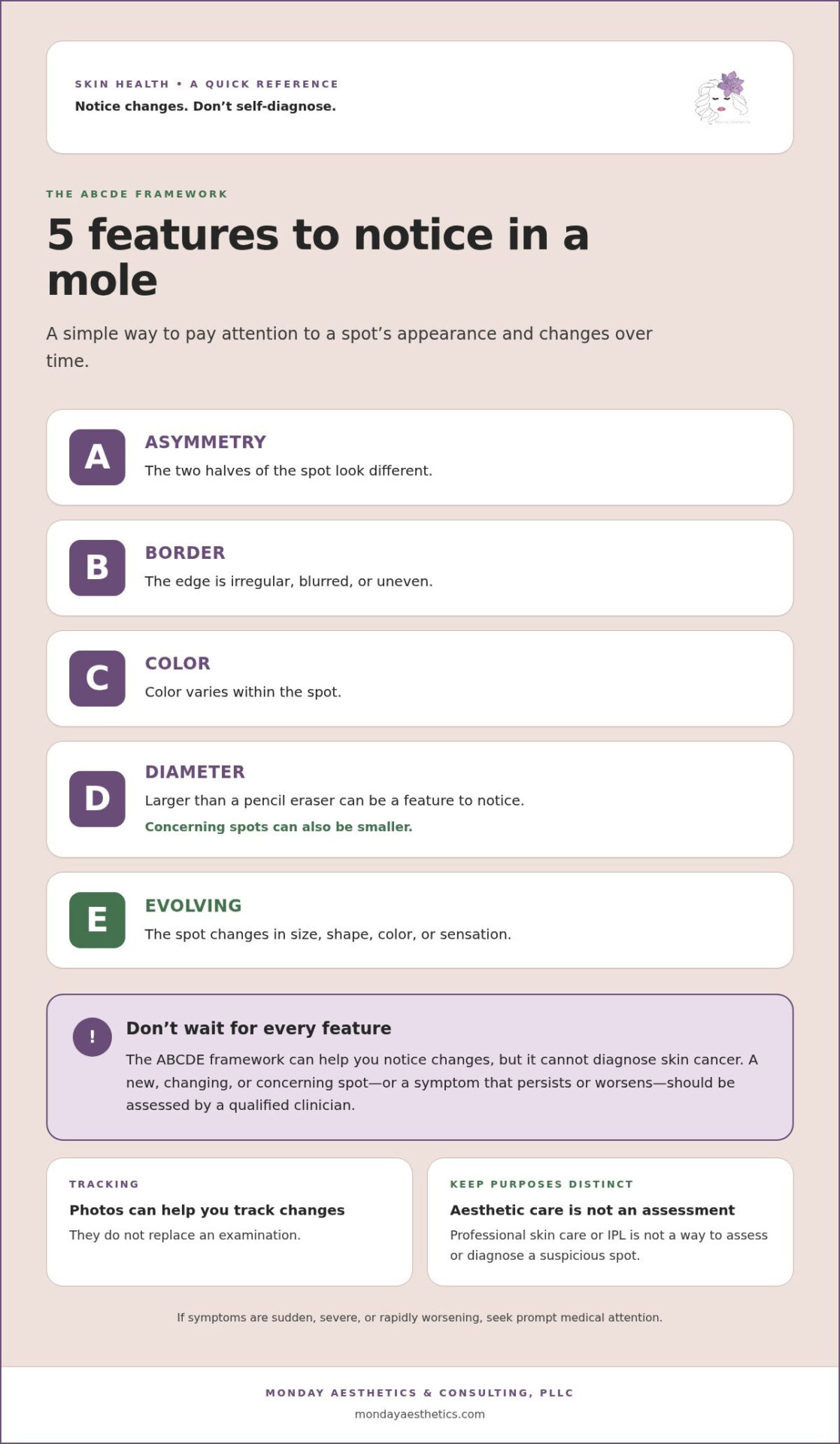
Arrange a medical evaluation for a new, changing, or concerning spot, or for a skin symptom that persists or worsens. The ABCDE framework can help you notice features in a mole, but it cannot diagnose skin cancer:
- A, Asymmetry: The two halves look different.
- B, Border: The edge is irregular, blurred, or uneven.
- C, Color: Color varies within the spot.
- D, Diameter: The spot is larger than a pencil eraser, though concerning spots can be smaller.
- E, Evolving: The spot changes in size, shape, color, or sensation.
Don’t wait for a spot to match every feature before seeking advice. A qualified clinician can assess it. Photographs may help you track changes, but they don’t replace an examination. Sudden, severe, or rapidly worsening symptoms also call for prompt medical attention.
Aesthetic care has a different purpose. Professional skin care or IPL may be considered for aesthetic goals, but these services aren’t a way to assess or diagnose a suspicious spot. If you’re considering aesthetic care in Burlington, explore individualized skin care after medical concerns have been appropriately assessed. Keeping clinical evaluation separate from appearance-focused decisions supports a thoughtful approach to Long term skin health.
Daily Habits That Support Skin Health Over the Long Term
A lasting routine doesn’t need to be elaborate. Manageable choices can help limit avoidable sun exposure and support day-to-day comfort, while leaving room to adjust as your skin’s needs change. Start with the basics and add products only when there’s a clear reason. The steps below offer a practical foundation, not a prescription for every skin type.
Protect from the sun, cleanse gently, moisturize as needed, and support your skin with steady everyday habits.
- Protect your skin from the sun. Choose a broad-spectrum sunscreen labeled SPF 30 or higher. “Broad-spectrum” means it protects against both UVA and UVB rays. Apply it to exposed skin before going outdoors, then reapply about every two hours while outside and after swimming or sweating. A wide-brimmed hat, protective clothing, and shade offer additional coverage. Sunscreen is one part of sun protection, not a reason to stay out longer.
- Cleanse gently. Wash with a mild cleanser and lukewarm water, using your fingertips rather than scrubbing. Cleanse as needed to remove dirt, sweat, or sunscreen. If washing leaves your skin feeling tight or irritated, reconsider the cleanser or how often you use it.
- Moisturize when your skin needs it. A moisturizer can help ease dryness and support comfortable skin. Applying it after cleansing may help hold moisture in. Choose a texture that feels comfortable, and adjust with seasonal changes or shifts in dryness.
- Keep supportive habits realistic. Avoiding tobacco, eating a balanced diet, getting adequate rest, and finding ways to manage stress can support overall well-being. None guarantees a particular skin outcome, but sustainable habits are more useful than expecting one product to do everything.
Build a simple morning and evening routine
In the morning, make sun protection the central step, adding gentle cleansing or moisturizer according to how your skin feels. In the evening, cleanse away the day and moisturize if needed. Add new products one at a time and follow their directions. This makes it easier to notice irritation and identify what suits you. Harvard Health’s skin care guidance also discusses the role of cleansing, moisturizing, and sun protection.
Support skin with habits beyond products
A long routine isn’t automatically better, and skin health doesn’t require expensive products. Choose steps you can repeat without discomfort or undue effort. Stress management can contribute to overall well-being, but it isn’t a stand-alone skin treatment. If a product causes persistent irritation, stop using it and seek advice from a qualified clinician. Long term skin health is better served by thoughtful consistency than by frequently changing your routine to follow every new trend.
How to Assess Products and Professional Skin Treatments Realistically
Daily skin care and aesthetic treatments can both have a place in a personal care plan, but they aren’t interchangeable. Everyday care supports routine needs, while professional services are optional choices shaped by individual goals and assessment. Neither is a guaranteed route to flawless skin or a substitute for medical evaluation when a skin concern needs attention.
| Approach | Its role | A realistic way to assess it |
|---|---|---|
| Daily skin care | Supports regular cleansing, moisturizing, and sun protection. | Consider your skin’s needs, the product’s directions, and whether you can use it comfortably and consistently. |
| Professional skin care | Offers individualized guidance and care in a professional setting. | Discuss your concerns, skin history, and what the service is intended to address. |
| Aesthetic procedures | Provide optional, procedure-based care for selected aesthetic goals. | Review suitability, potential benefits, limitations, risks, and aftercare with a qualified professional. |
What can a skincare product reasonably contribute?
Start with what a product is intended to do, how it should be used, and what its label actually says. Promotional language such as “rejuvenating” or “age-defying” isn’t proof of a particular result. Check directions and warnings, and be cautious of claims that promise dramatic changes or suggest one product can resolve many unrelated concerns. If a product causes persistent irritation, stop using it and seek appropriate advice.
Regulatory categories matter, too. Cosmetics and drugs are subject to different requirements, and a product’s category affects how it is regulated. A cosmetic claim isn’t the same as evidence that a product treats a medical condition. For Long term skin health, judge products by their intended use and realistic role, not by the confidence of the advertising.
Where can professional aesthetic care fit?
Professional services differ from one another. Microneedling uses a device with fine needles, SkinVive is a microdroplet hydration treatment, and IPL uses intense pulsed light. These are distinct approaches, not interchangeable solutions for overall skin health. Whether one is appropriate, and what outcomes are realistic, depends on individual goals, skin history, and professional assessment. Learn more about microneedling with HA serum and SkinVive hydration benefits.
Before deciding, discuss the purpose of a service, possible limitations, risks, and aftercare. A thoughtful plan may include no procedure at all. If you’re considering personalized aesthetic care, explore skin care options at Monday Aesthetics as a complement to, not a replacement for, consistent daily habits.
A Sustainable Skin-Health Plan With Monday Aesthetics in Burlington
A realistic plan begins with what you can maintain, not with an idealized routine or a list of procedures. Keep foundational daily care steady, then consider whether there’s an aesthetic goal you’d like to discuss. Long term skin health isn’t a fixed formula; it’s an approach that can adapt as your skin, priorities, and circumstances change.
What might an individualized plan take into account?
A thoughtful aesthetic discussion starts with your goals and context. You might want to address a particular appearance-related concern, learn about professional skin care, or understand what options exist. Sharing your current routine, relevant skin history, preferences, and comfort level helps shape a conversation around what feels appropriate to you. There’s no need to pursue a treatment just because it’s popular or someone else has chosen it.
At Monday Aesthetics in Burlington, care is led by board-certified Nurse Practitioner Thea Anderson. Options include professional skin care, microneedling with HA serum, SkinVive microdroplet hydration, and IPL. These services have different roles, and suitability depends on individual assessment. A discussion can cover an option’s purpose, limitations, relevant risks, and aftercare without assuming that a procedure is necessary or will produce a specific result.
Keep medical concerns distinct from aesthetic goals. A new, changing, or concerning spot, or a persistent skin symptom, belongs in a qualified medical evaluation. An aesthetic service isn’t a diagnostic exam and shouldn’t take the place of one. Once health concerns have been appropriately assessed, you can consider whether appearance-focused care aligns with your preferences.
Continue care at a pace that feels considered
Ongoing care doesn’t have to mean a packed calendar. A sustainable approach might mean maintaining daily habits that work for you, reviewing your goals periodically, and choosing professional maintenance only if it remains useful and comfortable. Rather than following a trend-driven checklist, consider whether each step has a clear purpose in your plan. It’s also reasonable to pause, simplify, or decide that your current routine is enough.
For people who value a more structured approach to aesthetic maintenance, Monday Memberships in Burlington offer an option to consider. Membership doesn’t replace daily skin care or make every service right for every person; it can be weighed against your individual goals and preferences.
Thoughtful care leaves room for choice. If you’re considering a personalized aesthetic discussion in Burlington, explore thoughtful aesthetic care with Monday Aesthetics at a pace that feels right for you.
Let Your Skin-Health Plan Grow With You
Your next step doesn’t need to be a complete routine overhaul. Choose one habit you can sustain, notice how your skin responds, and leave room to adjust as your needs change. Long term skin health is a continuing practice, not a finish line or a demand to look unchanged.
If you’re considering aesthetic care, begin with what matters to you. A thoughtful plan should respect your preferences and keep each service in its proper role: optional support alongside everyday care, never a promise of a particular result. You can ask questions, take time to consider your options, or decide that your current approach is right for now.
For an individualized conversation about aesthetic care, explore thoughtful aesthetic care with Monday Aesthetics. Start with your goals and move at a pace that feels comfortable. Monday Aesthetics serves clients in Burlington, Sedro-Woolley, Mount Vernon, Stanwood, Arlington, Marysville, Bellingham, Lynden, Everett, Anacortes, Oak Harbor, and La Conner.
Frequently Asked Questions
Can long-term skin health improve at any age?
Yes, supportive habits can begin at any life stage, although skin continues to change naturally. If you’re starting later, choose one manageable step, such as keeping sunscreen beside your keys or switching to a cleanser that doesn’t leave your skin uncomfortable. Long term skin health isn’t about reversing age or past damage. Aesthetic treatments are optional and don’t replace daily care or medical assessment of a concerning change.
Is sunscreen important on cloudy days?
Yes. Clouds can reduce some sunlight without eliminating ultraviolet exposure, so consider the UV index, how long you’ll be outside, and your personal circumstances. Follow public-health guidance by using broad-spectrum SPF 30 or higher and protective clothing, with reapplication as directed, especially during extended outdoor activities. Sunscreen doesn’t prevent every skin problem. If you notice a new or concerning spot, arrange a medical evaluation rather than relying on sun protection alone.
Does drinking more water prevent dry skin?
Not reliably. Drinking enough water supports general health, but adding extra water isn’t a guaranteed fix for dry skin. Indoor heating, cold or windy weather, frequent washing, age, and some health conditions may also contribute. Try avoiding very hot water and harsh cleansing, then use a moisturizer that feels comfortable. If dryness is persistent, severe, painful, or unexplained, seek medical guidance instead of repeatedly changing products or relying on hydration alone.
Are anti-aging skin-care products FDA-approved?
Not necessarily. FDA oversight differs by product category and claims: many cosmetics don’t require FDA premarket approval, while drugs are subject to different requirements. A product marketed for appearance isn’t automatically a treatment for a medical condition. Read its intended use, directions, and warnings, and be cautious of promises of dramatic or guaranteed results. FDA status alone also can’t tell you whether a product suits your skin or personal needs.
Can stress affect the appearance of your skin?
It may play a part for some people, but stress isn’t a universal explanation for a rash, flare, or other skin symptom. Notice whether a change seems to coincide with a difficult period, while keeping other factors such as new products or environmental changes in mind. Rest, movement, and calming practices may support overall well-being, but they aren’t skin treatments. Have persistent, painful, or changing symptoms assessed by an appropriate medical professional.
When should I see a medical professional about a changing mole?
Arrange a prompt medical assessment for a mole or spot that’s new, changing, unusual, or concerning. ABCDE can help you observe asymmetry, border, color, diameter, and evolution, but it isn’t a diagnostic test; don’t wait for several warning signs to appear. Aesthetic services can’t replace examination or diagnosis. Whether you’re in Burlington, Sedro-Woolley, Mount Vernon, Stanwood, Arlington, Marysville, Bellingham, Lynden, Everett, Anacortes, Oak Harbor, or La Conner, seek qualified medical care for assessment.