
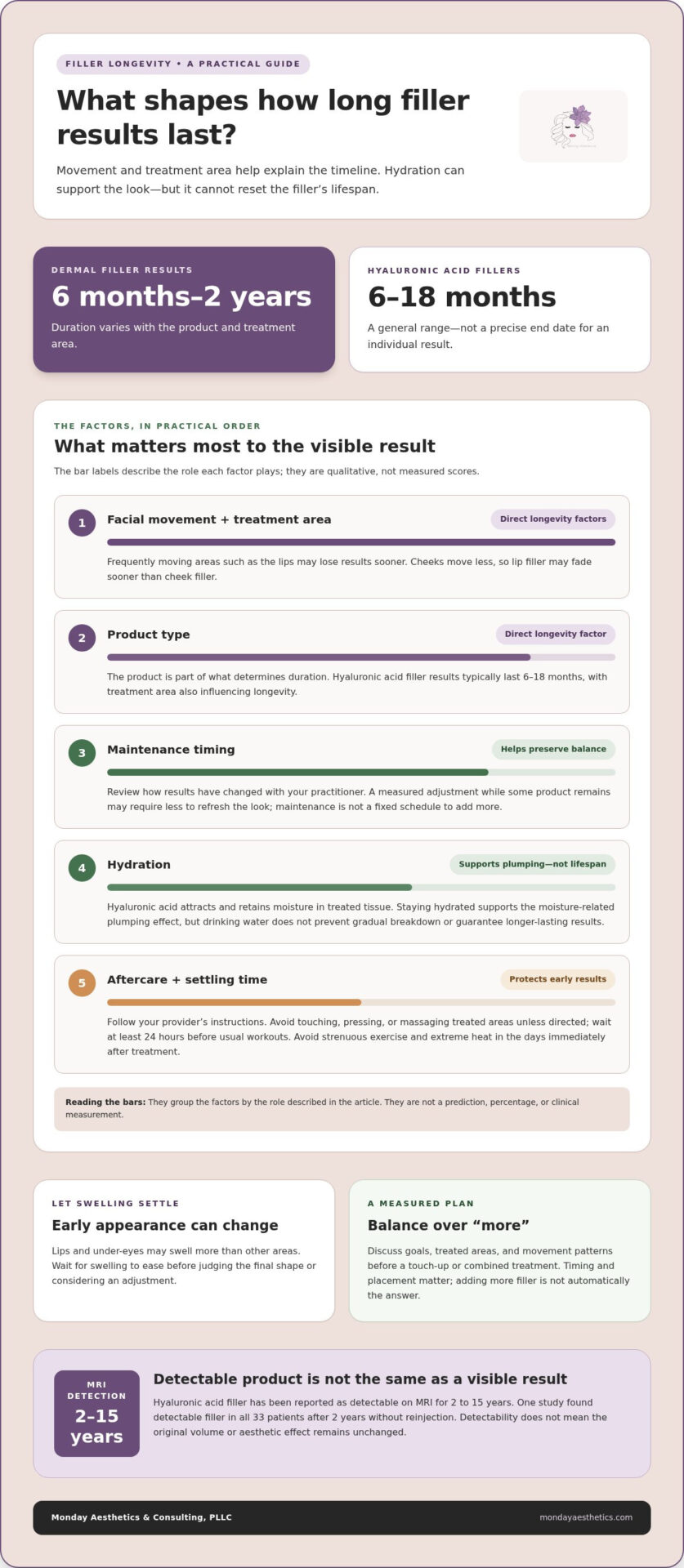
A longer-lasting result isn’t determined by the filler alone. Dermal filler results commonly last 6 months to 2 years, depending on the product and treatment area. Making dermal filler results last longer starts with understanding how facial movement, hydration, and thoughtful maintenance can influence the look over time.
It’s natural to want your dermal filler results to last, especially when they offer a subtle, welcome reflection of yourself. But no single routine or touch-up schedule suits every face. Areas that move frequently, such as the lips, may lose results sooner than less mobile areas. Hydration can support the plumping effect of hyaluronic acid fillers, but it won’t reset their lifespan.
This article explains how treatment area and facial movement relate to filler longevity, what hydration can and can’t do, and how maintenance appointments may help preserve a balanced result. You’ll also learn why appropriate timing and a measured approach matter more than simply adding more filler.
Key Takeaways
- Consider how much the treatment area moves: lips may need maintenance sooner than less mobile areas such as the cheeks.
- Staying hydrated can support the plumping effect of hyaluronic acid filler, but it doesn’t replace thoughtful treatment planning.
- Follow your aftercare instructions and avoid pressing or massaging treated areas unless your provider directs you to.
- Discuss maintenance timing around how your results change; gradual adjustments can help preserve a balanced look.
Treatment area and facial movement
Dermal filler results may last from 6 months to 2 years, depending on the product and treatment area. Facial movement helps explain that range: lips move during speaking, eating, and smiling, creating repeated mechanical stress. As a result, lip filler may fade sooner than cheek filler, where the structure moves less. A plan for making dermal filler results last longer should account for both placement and natural expression, not just the amount of volume used.
Swelling also varies by treatment area. Lips and under-eyes may swell more than other areas, so an early appearance doesn’t always show the settled aesthetic effect. Settling time can vary by treatment area, so wait for swelling to ease before judging the result. Allow that time before judging the final shape or considering an adjustment. The typical timeline reflects how swelling eases and filler integrates with surrounding tissue.
After treatment, follow the specific aftercare instructions you receive. Avoid touching, pressing, or massaging the area unless your provider instructs you to; pressure can shift filler and distribute it unevenly. Wait at least 24 hours before returning to your usual workouts. Strenuous exercise and extreme heat are also best avoided in the days immediately after treatment, when swelling and tenderness may still affect comfort.
Other aesthetic treatments can be coordinated with fillers when they support distinct goals. For example, Botox may address muscle activity, while filler restores volume; laser therapy or skincare may complement an overall plan. Timing and treatment choices matter, so don’t assume that combining procedures will extend filler longevity. A measured approach preserves facial structure and avoids overfilling. Review your goals, treated areas, and movement patterns with your practitioner before planning a combined treatment or touch-up.
Hydration and hyaluronic acid fillers
Hyaluronic acid interacts with water, but drinking water won’t reset a filler’s lifespan. Understanding the difference helps set realistic expectations for daily care and treatment decisions.
How Hyaluronic Acid Fillers Work
Hyaluronic acid fillers attract and retain moisture in treated tissue, creating a plumping effect that can restore volume. That interaction helps explain why hydration supports the appearance of treated areas, including the cheeks. Drinking water supports general hydration, but it doesn’t prevent the body from gradually breaking down filler. These treatments are temporary, and hydration alone cannot make their effects permanent or determine how quickly they soften.
Hyaluronic Acid Filler Duration
Hyaluronic acid filler results typically last 6-18 months, with longevity influenced by the product and treatment area. Movement can matter: a frequently active area may behave differently from the cheeks. This range helps frame expectations, rather than establish a precise end date for an individual result. Maintaining adequate hydration supports the filler’s moisture-related plumping effect, but it doesn’t guarantee a longer duration or replace a treatment plan tailored to facial structure and goals.
MRI findings add a useful distinction between visible results and detectable product. Hyaluronic acid filler has been reported as detectable on MRI for 2 to 15 years, and one study found detectable filler in all 33 patients after 2 years without reinjection. Detectability doesn’t mean the original volume or aesthetic effect remains unchanged; imaging evidence and what you see in the mirror describe different things.
Staying hydrated supports the moisture balance associated with hyaluronic acid. Drink water as part of your usual routine, rather than expecting extra intake to prolong filler. Alcohol can contribute to dehydration and skin inflammation, which may affect the plumping effect. These habits support overall care, while product type, placement, and facial movement remain relevant to how results change.
Some hyaluronic acid fillers can be dissolved with hyaluronidase. Results from dissolution may become visible within 24-48 hours after treatment. This is a clinical option, not a home remedy; don’t try to manipulate filler yourself. If you’re weighing an adjustment or have questions about dermal filler treatment planning, discuss your goals and the specific treated area with a qualified practitioner.
Maintenance appointments and touch-ups
Think of maintenance as a plan for preserving a balanced appearance, not a fixed schedule for adding more product. Timing and placement influence how a touch-up can support your goals.
Maintenance Scheduling
A maintenance appointment reviews how your injectable results have changed and whether a measured adjustment makes sense. Rather than waiting until all visible effect has faded, discuss changes in appearance and remaining filler with your practitioner. Returning while some product remains may mean less is needed to refresh your look. For Sculptra, treatment commonly involves 2 to 3 sessions scheduled over approximately 4 months.
Lifestyle and Filler Maintenance
Healthy habits support general skin care, but they can’t stop the body from gradually breaking down filler. Protect your skin from the sun and use gentle skincare consistently. Collagen-stimulating skincare products may complement certain fillers, but they don’t replace injectable maintenance. Don’t start or change supplements or medications to extend results; they aren’t a substitute for a treatment plan.
Costs of Filler Maintenance
The cost of dermal filler maintenance in the United States depends on the case. Factors include the product, amount needed, treatment area, placement, and whether the appointment involves a touch-up or a broader plan. A consultation can clarify the intended adjustment and its cost before treatment, helping you make a considered decision instead of treating every change as a reason to add volume.
Touch-ups that are too frequent can lead to excess product, distort tissue, and make later correction harder. A smoother result doesn’t require repeatedly adding filler; smaller adjustments may age better than repeated large-volume sessions. Allow enough time to assess your appearance between treatments, and discuss changes in wrinkles, volume, or facial balance during maintenance appointments.
How long dermal filler results last
Dermal filler results often last 6 to 24 months, depending on the product. That range is a starting point, not a single timeline for every contour. Product type, treatment area, placement depth, metabolism, activity level, and amount used all influence how results change. The practical takeaway: compare expectations by filler and area, rather than assuming every injectable fades at the same pace.
Hyaluronic acid fillers commonly last 6-18 months. By area, lip filler typically lasts 6-12 months, while cheek filler often lasts 12-18 months. The difference reflects factors such as facial movement and placement, not simply the volume injected. A result can remain detectable even as its visible shape softens, so gradual changes in contour don’t always mean the product has fully disappeared.
Other filler types follow different timelines. Calcium hydroxylapatite results typically last around a year, while poly-L-lactic acid results can last two years or more. Collagen-stimulating fillers work differently from products that provide immediate volume: their effects develop as the body produces collagen, and poly-L-lactic acid results can last up to about 2 years after a treatment series. These options have distinct treatment plans and aren’t interchangeable with every goal.
Typical duration ranges aren’t a promise of a particular result. Repeated movement in the lips, for example, can affect longevity differently than cheek placement. Product formulation and injection depth also shape how filler supports tissue. Dermal fillers offer a nonsurgical way to restore volume, but no single product suits every facial structure or desired effect. The goal is a subtle contour that remains harmonious as your face changes.
Use the timeline as a planning guide: note when your appearance begins to change, the area treated, and the filler type. Bring those observations to a dermal filler consultation to discuss a suitable product and maintenance approach.
Monday Aesthetics & Consulting, PLLC: Botox
Monday Aesthetics & Consulting, PLLC offers Dermal Fillers to restore facial volume and Botox for concerns related to muscle activity. These treatments address different aesthetic goals: Botox doesn’t extend the lifespan of dermal filler, so it isn’t a substitute for filler maintenance. In most patients, Botox results typically last three to four months. If you’re considering both treatments, a thoughtful plan can account for your priorities and how each treatment works, without adding filler just to maintain a separate result.
For a discussion about filler selection, placement, or maintenance, explore Dermal Fillers at Monday Aesthetics & Consulting, PLLC in Burlington, Washington. The right approach depends on the area you’d like to address and the appearance you want to preserve. Contact the practice or visit mondayaesthetics.com to discuss your options.
Choose a plan that feels like you
A thoughtful approach to making dermal filler results last longer starts with a clear sense of what you want to preserve, not a goal of changing your features. Before your next appointment, consider what matters most: a soft contour, refreshed volume, or a treatment plan that respects your natural expressions. This gives the conversation a personal direction and helps keep decisions intentional.
Monday Aesthetics & Consulting, PLLC offers Dermal Fillers, Botox, and Microneedling with HA Serum in Burlington, Washington. Each is a distinct treatment option, and the right conversation starts with your priorities and the areas you’d like to address. Discuss your goals with the practice to explore aesthetic care tailored to your needs.
Contact Monday Aesthetics & Consulting, PLLC to discuss your next step. A considered plan can help you move forward with clarity and confidence.
Frequently Asked Questions
How Long Do Fillers Last?
Most dermal fillers last 6 months to 2 years, with product and placement shaping the timeline. Changes can become noticeable gradually rather than appearing to vanish at once. After treatment, note the filler type and area treated. These details help you compare changes over time and discuss whether a measured adjustment fits your goals at a follow-up appointment.
What Makes Botox and Fillers Wear Off Faster?
Botox typically lasts three to four months in most patients; filler longevity varies with the product, treatment area, metabolism, activity level, and amount used. The treatments have different timelines. Frequent facial movement, for example, can affect lip filler differently than cheek filler. Track the return of muscle-related lines separately from changes in facial volume, so you can consider each concern on its own.
How long do different types of dermal fillers typically last?
Hyaluronic acid fillers typically last 6-18 months, while calcium hydroxylapatite results commonly last around a year. Sculptra results can last up to 2 years, and poly-L-lactic acid fillers may last up to about 2 years after a treatment series. PMMA may provide correction for up to about 5 years in select approved uses. These durations vary by filler type and treatment plan.
What factors affect how quickly dermal fillers break down?
Filler type, placement depth, treatment area, facial movement, metabolism, activity level, and the amount used all influence how results change. Cross-linking and the filler product family also affect persistence. For a useful comparison, record the treated area and product at each appointment, then note when you first observe a change. This gives you a clearer timeline to discuss when planning future treatments.
Can lifestyle changes help dermal filler results last longer?
Healthy habits support general skin care, but they don’t stop the body from gradually breaking down filler. Stay hydrated, protect your skin from sun exposure, and use gentle skincare. These habits support overall skin health and the moisture-related plumping effect of hyaluronic acid fillers. Treat them as supportive care, not a substitute for choosing an appropriate product or planning maintenance.
Does avoiding exercise or heat after filler injections affect longevity?
After filler injections, wait at least 24 hours before returning to your usual workouts, and avoid strenuous exercise and extreme heat in the days immediately after treatment. These aftercare measures matter while the treated area settles; they aren’t a way to extend the filler’s full lifespan. Follow the instructions for your specific treatment, and avoid pressing or massaging the area unless directed.