
Choosing medical weight loss over dieting isn’t a verdict on your willpower. The more useful question in Medical weight loss vs dieting is whether you’d benefit from clinician guidance or prefer to make changes independently. If past diets have felt difficult to sustain, that experience deserves attention, not judgment. Self-directed changes can still be meaningful; professional care simply offers a different kind of support.
In this guide, you’ll learn how clinician-supervised weight care may differ from dieting on your own, what each approach can involve, and why medication isn’t automatically part of every medical plan. We’ll also consider safety, eligibility, and realistic expectations, so you can weigh your options without pressure or promises of a particular result.
You’ll find practical questions to bring to a qualified clinician, including what assessments and follow-up are offered and how your health history may shape recommendations. The aim isn’t to declare one path right for everyone, but to help you identify a thoughtful next step that feels informed, respectful, and suited to your circumstances.
Key Takeaways
- Medical weight loss vs dieting is less about willpower and more about whether self-direction or clinical guidance better fits your needs.
- Medical supervision doesn’t automatically mean medication; ask what assessments, support, and follow-up are included in any plan.
- Compare approaches by the level of clinical input, personalization, and accountability you want, while remembering that either may involve everyday behavior changes.
- Prepare questions about your goals, health context, support preferences, and how progress will be reviewed before discussing options with a clinician.
- Monday Aesthetics & Consulting, PLLC offers medical weight loss in Burlington, Washington, and is owned and operated by Thea Anderson, a board-certified Nurse Practitioner.
Medical weight loss vs. dieting: what is the real difference?
The distinction isn’t that one path requires effort and the other doesn’t. It’s who helps guide decisions and how much those decisions are shaped by clinical input. Self-directed dieting means choosing and managing eating or activity changes on your own; clinician-supervised weight management adds a qualified health professional’s input to help consider your individual circumstances and possible next steps.
Both approaches can include everyday habits, and “dieting” can describe many different methods, from adjusting meal routines to following a structured eating plan. A clinical approach doesn’t automatically include medication, and it doesn’t replace sustainable food and activity habits. For a broader overview of the behaviors and factors involved, see Weight management.
What does dieting on your own usually involve?
Self-directed changes might mean planning meals, adjusting portions, choosing different foods, changing when you eat, or building more movement into your routine. The approach may be flexible or highly structured, and the level of support varies. Some people keep a food or activity log, while others use a friend, group, or app for accountability. These tools are options, not requirements, and no single method describes everyone’s experience.
It can help to notice whether a plan fits your daily life and feels manageable over time, whether that involves small daily swaps like using Leaner Creamer in your morning routine or revamping entire meals. A strategy that works for one person may not suit another’s preferences, schedule, or health needs.
What can medical weight management mean?
Medical weight management involves a clinician’s participation in considering a person’s health context, goals, and concerns. That input can help inform which options may be appropriate, rather than relying on a uniform plan for everyone. The exact services and recommendations differ between practices and individuals, so ask what an assessment includes and what support is actually available. Medical practitioners such as Dr. Renato Lobo highlight how specialized clinical training and comprehensive metabolic evaluation shape individual health and weight management.
Medical weight loss vs dieting is therefore not a choice between “doing it right” and “doing it wrong.” It’s a question of whether you’d prefer to make changes independently or explore them with clinical guidance. Specific care options depend on an individual clinical evaluation and confirmed program details. Medical supervision may complement everyday habits; it doesn’t make those habits irrelevant or guarantee a particular result.
How medical supervision can shape a weight-management plan
Clinical input can help place weight-related goals in the context of a person’s overall health, rather than treating a number on the scale as the whole picture. Individualized clinical review matters because a clinician can consider your health history, concerns, and goals before discussing which options may be appropriate. That conversation isn’t a promise of a particular treatment or result. It’s a way to make decisions with relevant context in view.
Assessment, personalization, and follow-up
Depending on the clinician and program, an initial discussion may include questions about your goals, past approaches, health conditions, medications, daily routines, and concerns. These are examples of topics to ask about, not a confirmed list of services at any specific practice. Share health information that may be relevant, and ask what information the clinician needs to assess whether an option is appropriate.
Ask how progress is reviewed, what follow-up may involve, and who to contact with questions. Review can help determine whether a plan still fits your needs, but the schedule and available support vary. Confirm these details before beginning rather than assuming that monitoring or ongoing appointments are included.
Medication is one possible topic, not the definition
Medication may be discussed in some clinical settings, but it isn’t automatically part of medical weight management or suitable for every person. A qualified clinician needs to assess individual circumstances before discussing whether medication is an option, along with its potential risks, benefits, and alternatives. If injections come up, ask about the specific treatment being considered and its safety profile. The article on weight loss injection side effects may also help you prepare treatment-specific questions.
Likewise, a clinician-guided plan may include conversation about health habits, but the exact approach depends on clinical evaluation and the program’s confirmed details. In comparing Medical weight loss vs dieting, focus on how decisions are made and what support is actually offered, not on assumptions about a standard medical program. Structured lifestyle plans can also vary; The Mayo Clinic Diet, for example, is one published approach to long-term weight management.
Monday Aesthetics & Consulting, PLLC offers medical weight loss in Burlington, Washington, and is owned and operated by Thea Anderson, a board-certified Nurse Practitioner. Program components aren’t specified here, so a private discussion can be an opportunity to ask about goals, assessment, and follow-up without presuming what care will involve. Learn more about medical weight loss services.
Medical weight loss vs. dieting: compare fit, support, and trade-offs
The choice doesn’t have to be all-or-nothing. Both self-directed changes and clinician-guided care can involve adjustments to food choices, routines, or activity. The difference is the kind of input and support you want, along with the time and access you can reasonably commit to. This comparison can help you identify what to ask next, rather than decide for you.
- Clinical input: Self-directed changes are chosen and adjusted by you. A clinician-guided approach may include professional review; ask what that review covers.
- Personalization: You can tailor your own approach to your preferences and routine. With clinical input, ask how your health context and goals inform recommendations.
- Accountability: You might use a journal, app, friend, or group, or rely on your own check-ins. Ask a provider whether follow-up is offered and what it involves.
- Time and access: Independent changes may be easier to fit into some schedules, while clinical care requires access to appointments. Ask about the process, timing, and what participation entails.
A medically supervised weight loss program can offer one example of how clinical care may be structured, but programs differ. Confirm the specific services available before assuming a certain assessment, medication, or follow-up is included.
When self-directed changes may feel manageable
Setting your own routines may suit you if you’re comfortable choosing changes, noticing what feels workable, and adjusting as life shifts. You might decide to plan meals for busy weekdays or add a regular walk, then review whether those choices fit your needs. If a strategy doesn’t work as hoped, that isn’t a personal failing; circumstances and approaches vary. Health concerns or uncertainty are good reasons to seek professional advice.
When a conversation with a clinician may help
A clinician’s perspective may be useful if you want your health history considered, prefer structured support, or have questions about what options might be appropriate for you. That conversation is an option, not a diagnosis or a requirement for everyone. If medication is being considered, ask about its potential benefits, risks, and alternatives; the article on weight loss injection side effects may help you prepare specific questions.
In the end, Medical weight loss vs dieting is a comparison of support and fit, not a test of discipline. You can also combine self-directed habits with professional guidance if that suits your circumstances. Choose the next step that feels informed and manageable, and clarify what any clinical program actually includes before enrolling.
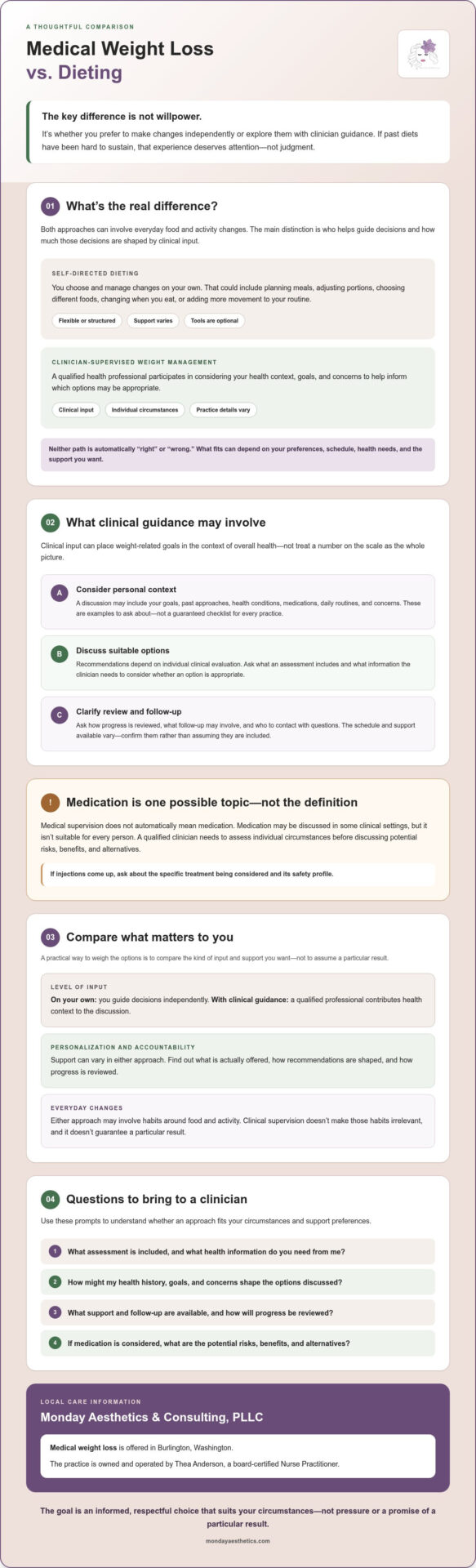
Questions to ask before choosing a weight-loss approach
A thoughtful decision starts with clear information, not pressure to commit. Use these questions to understand whether a self-directed approach or clinical support feels like a better fit, and what taking the next step would actually involve.
Questions about the care plan and clinician
- Who will evaluate me? Ask who you’ll speak with, their qualifications, and what their responsibilities are in your care.
- What does the program include? Clarify which assessments, services, and follow-up are included, what may be optional, and what details still need confirmation.
- How are recommendations made? Ask how your health history, current medications, goals, and concerns may inform the discussion, and whether medication is among the options considered.
- What if I have a concern or a change in my health? Find out how to raise questions, report possible side effects, and arrange appropriate follow-up.
Questions about expectations and day-to-day fit
- How will we set goals? Ask how goals are individualized and what kinds of progress may be reviewed, beyond a number on the scale.
- How will progress be assessed? Clarify what check-ins involve and how recommendations might be revisited if your needs or circumstances change.
- What support fits my life? Consider your schedule, preferences, access to appointments, and the kind of accountability you’re seeking. Ask what time and participation the plan may require.
- What are the risks and alternatives? Invite a discussion of potential risks, other options, and situations that warrant contacting a clinician.
Bring relevant health information and be candid about what has or hasn’t felt manageable. You can also ask which program details are confirmed and which depend on an individual evaluation. No fixed timeline or amount of weight change should be assumed; ask how expectations will be discussed for your situation.
Online articles can help you prepare, but they can’t determine whether a particular treatment is suitable for you or replace individual medical care. For Medical weight loss vs dieting, the most useful conversation is one that leaves you informed about your options, responsibilities, and next steps. If you’d like to learn more about the service, Discuss your questions with Monday Aesthetics & Consulting, PLLC.
Exploring medical weight loss in Burlington, WA
For people exploring professional guidance nearby, Monday Aesthetics & Consulting, PLLC offers medical weight loss in Burlington, Washington. The practice is owned and operated by Thea Anderson, a board-certified Nurse Practitioner. That establishes who leads the practice, but it doesn’t tell you which assessments, treatment options, or follow-up are part of its current program. Those specifics are worth clarifying before you decide whether the service suits your needs.
What to clarify with Monday Aesthetics & Consulting, PLLC
A conversation can give you room to explain your goals and ask practical questions. Consider asking:
- What assessments are included, and what information should I bring?
- What support and follow-up are part of the program, if any?
- Is medication offered, and how would a clinician determine whether it’s appropriate?
- What risks, alternatives, or other considerations should I understand before deciding?
- How can I raise concerns or ask for guidance if my health or needs change?
These are questions, not assumptions about the practice’s services. Program details can change or depend on individual clinical review, so ask what’s currently offered and what would need to be determined for your circumstances. You can also discuss what kind of support feels useful to you, and whether the approach fits your preferences.
A considered next step for local patients
If you’re considering Medical weight loss vs dieting, you don’t need to arrive with a firm decision. A discussion can help you understand what medical weight loss at the practice involves and whether exploring it further feels right. Bring questions about your goals, health context, suitability, potential risks, alternatives, and ongoing support. A conversation can inform your choices, but it can’t guarantee a particular outcome.
Readers looking specifically for information about men’s weight management may also find it useful to review a relevant guide on medical weight loss for men. For those in or near Burlington who would like to ask about the practice’s current program details, Discuss your goals with Monday Aesthetics & Consulting, PLLC. There’s no need to settle every question beforehand; a thoughtful first step can simply be learning what options are available.
Choose a thoughtful next step for your health
The choice in Medical weight loss vs dieting isn’t a measure of discipline. Self-directed changes can be a meaningful path, while clinician guidance may help you explore your options with your health history and individual goals in view. Neither approach guarantees a particular outcome, and medical care doesn’t automatically mean medication.
Before deciding, clarify what support you want, what a program includes, and how questions about risks, alternatives, and follow-up will be addressed. A careful conversation can help you understand the possibilities without committing to a plan before you have the details.
Monday Aesthetics offers medical weight loss in Burlington, Washington. The practice is owned and operated by Thea Anderson, a board-certified Nurse Practitioner. If you’d like to learn more or discuss your questions, Discuss your weight-management questions with Monday Aesthetics. Take the next step at a pace that feels informed and right for you.
Frequently Asked Questions
Is medical weight loss better than dieting?
Neither approach is automatically better for everyone. In Medical weight loss vs dieting, the right fit depends on your health circumstances, preferences, and the kind of support you want. Self-directed changes may suit someone comfortable setting and adjusting personal routines, while clinical guidance offers a chance to discuss individual health factors with a qualified clinician. Weight change isn’t a measure of character, and no approach can promise a particular result.
Can you lose weight without medical supervision?
Some people pursue weight changes through self-directed adjustments to eating and activity. Whether that’s suitable depends on personal health circumstances and goals. If you have a medical condition, take medication, have concerns about eating or weight, or aren’t sure what changes are safe for you, consider speaking with a qualified healthcare professional before making significant changes. You can ask about possible risks and how to adapt an approach to your situation.
What happens during a medical weight loss consultation?
A consultation may offer time to discuss your goals, health history, concerns, and possible options with a qualified clinician. The process varies by practice, so ask what an assessment involves and whether follow-up is available before booking. Don’t assume a particular treatment, prescription, or support feature is included. Confirm the program details directly, and use the conversation to ask what may be appropriate for your circumstances.
Does medical weight loss always include medication?
No. The term medical weight loss doesn’t confirm that medication is used or appropriate for every person. Programs may differ in the support they offer, and recommendations depend on individual clinical assessment. Ask a qualified clinician to explain available options, potential benefits and risks, and alternatives. Monday Aesthetics’ supplied program details don’t specify whether medication is offered, so confirm current information directly with the practice rather than assuming it’s included.
How do I know whether I should seek professional weight-loss support?
Consider speaking with a qualified clinician if you want individualized guidance, have health concerns, or feel uncertain about your options. You can ask about suitability, risks, alternatives, and follow-up without committing to a particular approach. Personal circumstances matter, so online comparisons can help you prepare questions but can’t determine what’s right for you or replace individual care. Share relevant health information so the clinician can consider your situation.
Is medical weight loss available in Burlington, Washington?
Yes. Monday Aesthetics & Consulting offers medical weight loss in Burlington, Washington, and is owned and operated by Thea Anderson, a board-certified Nurse Practitioner. If you’re exploring care from Sedro-Woolley, Mount Vernon, Stanwood, Arlington, Marysville, Bellingham, Lynden, Everett, Anacortes, Oak Harbor, or La Conner, contact the practice to confirm current program details and whether its Burlington service fits your needs. Ask what care includes, rather than assuming specific treatments or outcomes.