
What if the most important part of laser tattoo removal happens before the first pulse? A thoughtful assessment helps shape care around your skin and tattoo instead of relying on a one-size-fits-all approach. It’s understandable to have questions about burns, scarring, pigment changes, or infection, especially when online advice about preparation and aftercare doesn’t always agree.
Safe laser tattoo removal starts with understanding factors that can influence treatment and healing. Skin tone, ink colors, tattoo size and location, and your skin’s response all matter. Knowing what to discuss beforehand can help you feel informed and prepared, without assuming everyone needs the same plan or will have the same outcome.
This guide explains safety questions to raise, how an individualized assessment can inform treatment, and what to consider as your skin heals between sessions. Monday Aesthetics & Consulting, PLLC offers tattoo removal in Burlington, Washington, under the care of board-certified Nurse Practitioner Thea Anderson. The goal is a measured conversation about your skin, your tattoo, and care that respects both.
Key Takeaways
- Safe laser tattoo removal is a risk-aware process shaped around your skin, tattoo, and treatment goals.
- Skin tone, ink characteristics, and other individual factors can influence treatment planning.
- A careful assessment helps set realistic expectations and guide decisions about treatment and healing.
- Sharing relevant health history, medications, past treatments, and skin concerns can help inform your care plan.
- Learn what to consider when exploring tattoo removal with Monday Aesthetics in Burlington, Washington.
What Does Safe Laser Tattoo Removal Mean for Your Skin?
Safety doesn’t mean treatment will be free of discomfort or complications. It means recognizing possible risks, assessing the skin and tattoo before treatment, and making decisions with the person receiving care. Laser energy acts on tattoo pigment, but the surrounding skin also needs consideration. A careful approach takes both into account.
Safe laser tattoo removal is individualized, risk-aware care that considers your skin, health history, tattoo, and goals without promising a risk-free outcome.
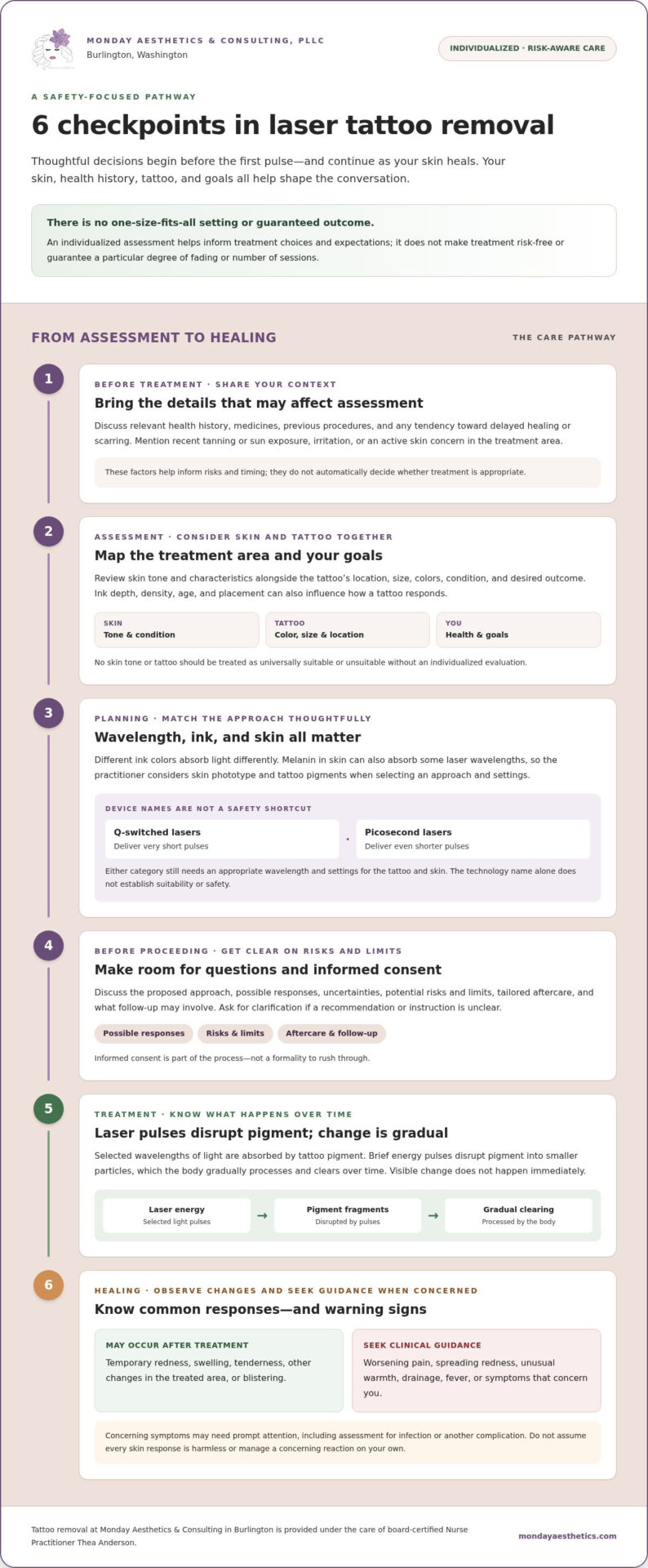
After treatment, temporary redness, swelling, tenderness, or other changes in the treated area may occur. Blistering is also possible. Don’t assume every skin response is harmless or try to manage a concerning reaction on your own. Seek clinical guidance for worsening pain, spreading redness, unusual warmth, drainage, fever, or symptoms that concern you. These may need prompt attention, including assessment for infection or another complication.
Why tattoo-removal safety is specific to each person
Your skin and the treatment area help inform how care is planned. Share relevant health history, medicines, previous procedures, and any tendency toward delayed healing or scarring. Recent tanning or sun exposure, irritation, or an active skin concern in the area may also affect assessment and timing. These factors don’t automatically determine whether treatment is appropriate; they help the clinician consider risks and an approach suited to you.
For example, already irritated skin may need particular consideration before treatment. A tattoo over an area with a history of healing difficulties is also worth discussing. No skin tone or tattoo should be treated as universally suitable or unsuitable without an individualized evaluation.
What a safety-focused assessment should establish
A consultation should cover the tattoo’s location, size, colors, and condition, as well as your skin and desired outcome. The practitioner can discuss relevant health information and explain how these details may shape treatment decisions and expectations. Use the conversation to ask about possible responses, uncertainties, and tailored aftercare.
Informed consent is part of the process, not a formality to rush through. Before deciding whether to proceed, you should have a chance to understand the proposed approach, its potential risks and limits, and what follow-up may involve. Ask questions if a recommendation or instruction is unclear. A useful overview of removal approaches and potential side effects is available in Tattoo Removal Methods and Safety; general information cannot replace advice based on your own skin and health history.
At Monday Aesthetics & Consulting in Burlington, tattoo removal is provided by board-certified Nurse Practitioner Thea Anderson. The consultation supports informed choices and attentive care.
How Laser Tattoo Removal Works, and What Influences Skin Safety
Laser tattoo removal uses selected wavelengths of light that tattoo pigment absorbs. Brief energy pulses disrupt pigment into smaller particles, which the body gradually processes and clears over time. The laser targets ink, but it doesn’t act on pigment in isolation: surrounding skin can also absorb energy, so wavelength, pulse characteristics, and treatment settings need careful consideration.
One laser approach does not suit every tattoo. Ink colors, pigment depth, skin characteristics, and laser settings all affect how energy interacts with the treatment area.
How laser energy interacts with tattoo pigment
Different ink colors respond differently to light. A wavelength absorbed by one pigment may be less effective for another, which is why tattoo colors matter during planning. Laser pulses fragment pigment rather than simply lifting ink from the skin’s surface. The body then gradually removes some of those fragments, so visible change develops over time, not immediately.
Ink can sit at varying depths, and a tattoo may contain several pigments in the same design. Age, placement, and density can also influence how it responds. A dense, multicolor design, for example, presents different planning considerations than a small tattoo made with dark ink. These details guide an individualized approach; they don’t guarantee a degree of fading or a set number of sessions.
Why skin tone, ink, and device choice matter
Skin contains melanin, which can also absorb some laser wavelengths. A clinician considers skin phototype alongside the tattoo’s pigments to select an approach intended to target ink while accounting for surrounding skin. This requires judgment: settings chosen for one person or ink color may not be appropriate for another. No skin tone alone determines suitability.
Q-switched lasers deliver energy in very short pulses and have long been used for tattoo removal. Picosecond lasers deliver even shorter pulses. Either category still requires an appropriate wavelength and settings for the tattoo and skin; the technology name alone doesn’t establish suitability or safety.
For an informed conversation, be ready to describe the tattoo’s history, including previous removal attempts, and share changes in your skin or health that could affect treatment planning. The practitioner can explain how the ink colors, location, and skin assessment relate to the proposed approach. If an explanation is unclear, pause to ask questions before treatment begins. Safe laser tattoo removal depends on thoughtful decisions, not a device label or one setting applied to every tattoo.
At Monday Aesthetics & Consulting in Burlington, board-certified Nurse Practitioner Thea Anderson provides tattoo removal with an individualized perspective. If you’re considering treatment, explore tattoo removal care in Burlington as a starting point for discussing your skin and tattoo.
Laser Tattoo Removal Risks: Separate Common Concerns from Warning Signs
Knowing what can happen after treatment helps you respond thoughtfully without assuming every change signals a complication. Reactions vary: the treatment area may become temporarily red, swollen, tender, or sensitive. Blistering can also occur. Follow the aftercare instructions for your treatment rather than comparing your skin with someone else’s.
Which skin changes may occur after treatment?
Short-term redness, swelling, or sensitivity can occur as the skin responds to laser energy. Your clinician can explain what to expect and how to care for the area. If you develop a blister, don’t deliberately pop or pick at it; disrupting the skin can increase irritation and infection risk. Follow your aftercare guidance, and seek advice if the reaction is severe, worsening, or difficult to manage.
Other possible risks include changes in skin pigment. The treated area may become lighter or darker than nearby skin, and the change may persist. Scarring is also possible, though it isn’t inevitable. Individual factors and your skin’s response matter, so discuss these risks in the context of your skin and treatment plan. No article can predict exactly how your skin will heal.
When should you seek prompt clinical guidance?
A mild, improving reaction may be part of the skin’s short-term response, but severe, worsening, or infection-like symptoms are reasons to seek clinical advice promptly. Contact a qualified healthcare professional if you notice concerning changes such as:
- Increasing redness, warmth, swelling, or pain rather than gradual improvement.
- Drainage that looks like pus, or an unpleasant odor from the treated area.
- A fever or feeling unwell alongside changes at the treatment site.
- Extensive blistering, a worsening open area, or another reaction that concerns you.
These signs don’t confirm a particular complication, but they deserve assessment. If symptoms are severe or rapidly worsening, seek prompt medical care. Don’t wait for a routine follow-up to raise an urgent concern, and don’t rely on online descriptions to diagnose what’s happening.
Keep the treatment area clean and follow the specific instructions you were given, including guidance on protecting or dressing the skin. Avoid picking, scratching, or applying products that weren’t recommended for your aftercare. If an instruction conflicts with advice from your healthcare professional, or you’re unsure how to interpret a change, seek individualized guidance. Safe laser tattoo removal includes knowing when a response calls for reassurance and when it needs professional attention.
How to Prepare for Laser Tattoo Removal and Support Healing
Preparation is a shared process: you bring a clear picture of your health and goals, and the treating clinician uses that information to shape guidance for your skin. General online tips can’t account for your medical history, tattoo, or how the treated area responds. Follow the instructions given for your care, and raise questions before treatment rather than trying to resolve uncertainty on your own.
A practical preparation checklist
Use this sequence to organize the conversation and your next steps:
- Describe the tattoo, including its history, location, and any previous removal treatments.
- Share relevant health conditions, medicines, skin sensitivities, and any history of healing concerns or scarring.
- Explain your goals and ask what results and risks are realistic for your individual case.
- Discuss comfort, treatment-day preparation, aftercare, and how follow-up questions will be handled.
- Read the care instructions, clarify anything you don’t understand, and follow the plan provided for your treatment.
What to discuss before your appointment
Be open about details that may seem unrelated to the tattoo. Current medicines, past procedures in the area, changes in skin condition, and concerns about healing can all inform the discussion. Mention recent tanning or irritation, too. Share whether the tattoo has been treated before, and describe what you hope to achieve, whether that’s fading or removal. This gives the clinician a fuller basis for explaining the proposed approach.
Use the consultation to ask about possible reactions, comfort measures, and what to do if healing doesn’t seem to follow the expected course. Understanding the plan and its limitations supports informed consent. You should have time to consider the information and ask questions before deciding to proceed.
How to care for treated skin afterward
Follow the wound-care instructions provided by the treating clinician rather than substituting advice from forums or generic articles. Guidance may vary with the skin’s condition and the treatment performed. Ask how to keep the area protected, whether and how to use any recommended products, and what to do about sun exposure. Avoid picking, rubbing, or applying unapproved products to the area. If you’re unsure what counts as irritation or which products are appropriate, ask for individualized direction.
Keep the practice’s follow-up instructions accessible. If the area becomes increasingly painful, looks more irritated rather than gradually settling, or you notice drainage, fever, or another concerning change, contact the treating practice or a qualified healthcare professional promptly. Severe or rapidly worsening symptoms warrant prompt medical attention. Don’t wait for a planned follow-up if you’re worried about healing.
Safe laser tattoo removal includes preparation, clear communication, and attentive aftercare, not simply the treatment itself. For tattoo removal in Burlington, schedule a tattoo removal consultation with Monday Aesthetics & Consulting, PLLC, owned and operated by board-certified Nurse Practitioner Thea Anderson.
Choosing Safe Laser Tattoo Removal in Burlington, WA
A local consultation turns general information into a plan shaped around your tattoo, skin, and priorities. Safe laser tattoo removal isn’t defined by a particular device name or a promise of perfect results. It depends on careful assessment, clear discussion of risks and expectations, and decisions made with your individual circumstances in mind.
What a thoughtful local consultation can help clarify
At a consultation, the practitioner can review the tattoo’s colors, size, location, age, and previous removal attempts, alongside relevant skin and health concerns. Those details help frame a conversation about possible treatment approaches, how your skin may respond, and what level of fading or removal may be realistic. The plan should reflect your goals while acknowledging that responses and outcomes can vary.
Bring forward any concerns that would help you feel informed. You might ask how your skin’s healing history affects planning, what changes to watch for afterward, or what follow-up guidance will be available. If you’re anxious about discomfort or have had a reaction to previous treatment, say so. Open questions give the practitioner a chance to explain recommendations and help you decide whether you’re ready to proceed.
A useful consultation should leave you with a clearer understanding of the proposed care and its limits. Ask for unfamiliar terms to be explained, discuss potential risks, and take time to consider the information before giving consent. No single answer applies to every tattoo, and an individualized plan should not be presented as a guarantee.
Explore tattoo removal at Monday Aesthetics
Monday Aesthetics & Consulting, PLLC provides tattoo removal in Burlington, Washington. The practice is owned and operated by Thea Anderson, a board-certified Nurse Practitioner. A thoughtful conversation can connect your tattoo details and skin concerns with your goals, while making room for questions about treatment and healing.
Monday Aesthetics serves clients in Burlington and nearby communities, including Sedro-Woolley, Mount Vernon, Stanwood, Arlington, Marysville, Bellingham, Lynden, Everett, Anacortes, Oak Harbor, and La Conner. If you’re considering removal, explore tattoo removal at Monday Aesthetics and arrange a personal consultation. Bringing your questions and relevant treatment history can help make the conversation more useful. The next step doesn’t need to be a rushed decision; it can simply be a chance to understand your options and discuss care with an individualized perspective.
Take Your Next Step with Confidence
You don’t need to have every decision settled before exploring tattoo removal. Consider what you hope will change, what matters most to you during care, and which questions would help you feel comfortable moving forward. Being clear about your priorities can make a personal consultation more useful.
Safe laser tattoo removal isn’t about rushing toward a particular result. It’s about making an informed choice that feels considered for you, then staying engaged with the care process. You’re entitled to understand the proposed approach, speak openly about concerns, and take the time you need to decide whether it aligns with your goals.
If you’re ready to continue the conversation, explore tattoo removal at Monday Aesthetics. Bring your questions, share what you’re hoping for, and make the next step a thoughtful one. With clear information and a pace that feels right, you can move forward with greater confidence.
Frequently Asked Questions
Is laser tattoo removal safe for all skin tones?
Laser tattoo removal isn’t automatically suitable or unsuitable based on skin tone alone. Skin pigment can absorb some laser energy, so the interaction between your skin and the tattoo’s ink needs individual consideration. During an assessment, discuss your skin’s usual response to treatments and any history of pigment changes. Safe laser tattoo removal depends on weighing those details when planning care, not assuming one setting works for everyone.
Can laser tattoo removal cause scarring or permanent skin discoloration?
Yes, scarring and changes in skin color are possible risks, though they aren’t inevitable. Pigment may become lighter or darker than the surrounding skin, and a change can persist. Share any history of raised scars or unusual healing during your assessment, and ask what signs should prompt follow-up. If a new mark concerns you after treatment, have the treating clinician assess it rather than relying on comparisons with someone else’s healing.
How does a provider assess whether laser tattoo removal is appropriate for me?
An assessment considers both your skin and the specific tattoo, including its colors, location, and any previous removal work. The clinician may also review relevant health information and medicines that could affect planning or healing. Bring a list of current medications and describe your goal, such as fading a design rather than seeking its full removal. This helps make the conversation more specific and supports informed decisions about next steps.
What happens if my skin blisters or becomes painful after laser tattoo removal?
A small blister or tenderness can occur, but don’t pop, pick, or puncture the area. Follow the aftercare instructions you received and contact the treating practice if pain is severe, worsening, or accompanied by spreading redness, warmth, drainage, or fever. If symptoms progress quickly or you feel significantly unwell, seek prompt medical attention. If practical, note when the change began so you can describe it clearly when requesting advice.
Can I have laser tattoo removal if I have a tan or sun exposure?
Recent tanning or sun exposure can affect how the skin is assessed, so disclose it before treatment rather than trying to conceal a tan. The clinician can consider your current skin condition and decide whether treatment should proceed or be postponed. Don’t rely on a general online waiting period as personal clearance. If your skin is also sunburned, irritated, or peeling, mention those changes during the discussion.
How should I care for my skin after laser tattoo removal?
Follow the aftercare instructions provided for your treatment, since dressing and product guidance may depend on the area and its response. Keep the written instructions available so you can refer to them at home, and avoid adding creams or home remedies unless recommended by your clinician. Ask how to protect the treated area from sun and what to do if clothing rubs against it. Contact the practice about unexpected or worsening changes.
Is laser tattoo removal in Burlington, WA personalized to the tattoo and skin?
Monday Aesthetics & Consulting, PLLC provides tattoo removal in Burlington, Washington, with care informed by the person and tattoo being assessed. A consultation can address details such as ink colors, placement, skin concerns, and your desired outcome. The practice is owned and operated by Thea Anderson, a board-certified Nurse Practitioner. If you’re considering treatment in Burlington, bring your questions and relevant treatment history to the conversation.