
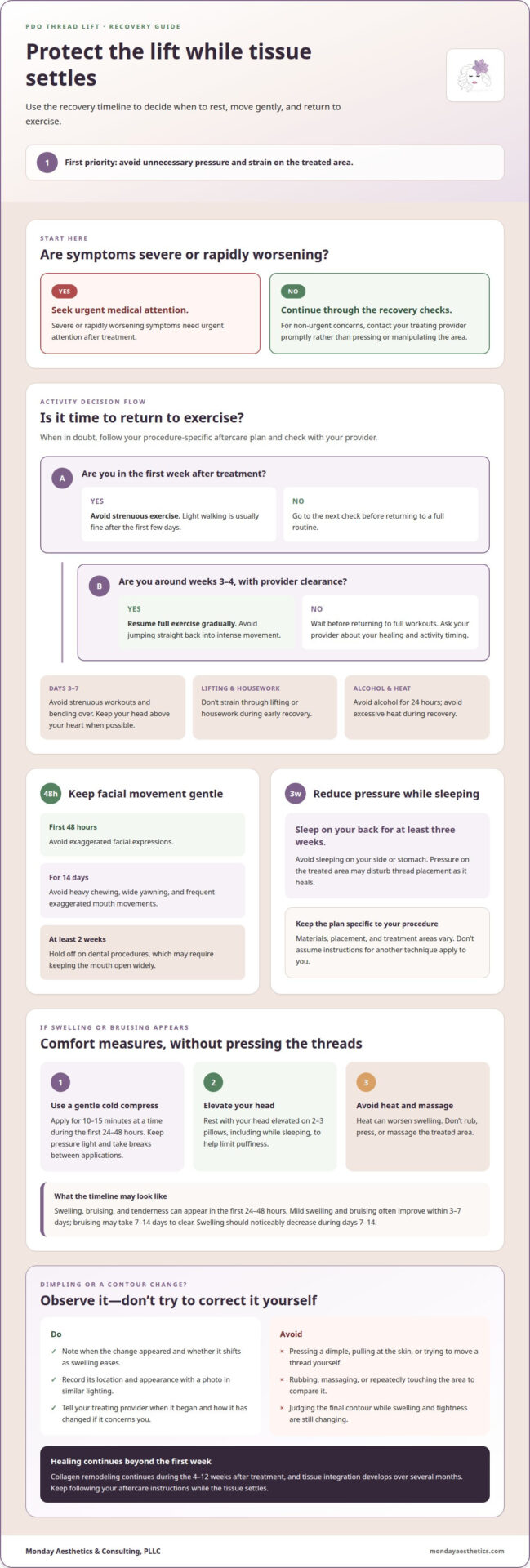
The first week after a PDO thread lift is for protecting your results, not testing them. Good PDO thread lift aftercare and recovery means avoiding strenuous exercise for at least one week, then returning to full workouts around weeks 3-4 with provider clearance. Avoid rubbing or massaging the treated area, and keep facial movements gentle while it settles.
It’s natural to notice swelling, bruising, tightness, or small irregularities as your skin heals. Mild swelling and bruising often improve within 3-7 days, while some changes can take longer to settle. Gentle cold compresses and sleeping with your head elevated can help you feel more comfortable.
Timing matters for more than exercise after a PDO thread lift. This guide covers what to avoid, ways to manage swelling and bruising, what to do if you notice dimpling or a possible change in thread position, and when to resume skin treatments and active products. You’ll also find practical steps for easing back into your routine while giving treated tissue time to heal.
Key Takeaways
- Keep facial movements gentle and avoid heat, alcohol, and strenuous activity during early healing to limit strain on the treated area.
- Don’t press, rub, or try to correct dimpling yourself; protect thread placement and seek guidance if an irregularity concerns you.
- Wait to resume facials, massages, and active ingredients such as retinoids or exfoliating acids until the appropriate recovery window has passed.
- Return to exercise and skincare gradually, following your treatment-specific aftercare instructions as your tissues settle.
1. Can I exercise after getting PDO threads?
For the first week after a PDO thread lift, avoid strenuous exercise to protect healing tissue. Light walking is usually fine after the first few days, but postpone running, weight training, and vigorous classes. Full exercise routines can usually resume around weeks 3-4, with provider clearance. Increase activity gradually rather than returning to intense movement at once.
During days 3-7, avoid strenuous workouts and bending over, which can increase pressure and movement around treated areas. Keep your head above your heart when possible, and don’t strain through lifting or housework. Avoid alcohol for 24 hours because it may worsen bruising. Avoid excessive heat during recovery and follow your procedure-specific aftercare instructions. Heat can aggravate swelling during early healing.
Keep facial movement gentle, too. Avoid exaggerated expressions during the first 48 hours, then continue avoiding heavy chewing, wide yawning, and frequent exaggerated mouth movements for 14 days. Hold off on dental procedures for at least 2 weeks, since keeping the mouth open widely can strain lower-face threads. These practical guidelines help limit unnecessary tension while tissue settles.
Recovery after PDO threads can differ from recovery after other thread lift types because materials, placement, and treatment areas vary. Don’t assume instructions for another technique apply to you; follow the aftercare plan provided for your specific procedure.
Sleep on your back rather than your side or stomach for at least three weeks after treatment. Pressure on the treated area may disturb thread placement as it heals.
Seek urgent medical attention for severe or rapidly worsening symptoms after treatment. For concerns that are not urgent, contact the treating provider promptly rather than pressing or manipulating the area yourself.
Contact your provider if you have concerns about healing, returning to exercise, or an unexpected change. Attend follow-up appointments as arranged during your aesthetic consultation, and use them to discuss when you can resume your normal routine.
2. How do I reduce swelling and bruising after PDO threads?
Swelling, bruising, and tenderness can appear during the first 24-48 hours after treatment. Mild swelling and bruising usually resolve within 3-7 days, though bruising may take 7-14 days to clear. Tightness can also occur as tissue settles, and swelling should noticeably decrease during days 7-14. These temporary effects may make the face look uneven at first.
For comfort, apply a cold compress gently for 10-15 minutes at a time during the first 24-48 hours. Keep pressure light; don’t press or massage the treated area. Take breaks between applications, and avoid heat, which can worsen swelling. Rest with your head elevated on 2-3 pillows, including while sleeping, to help limit puffiness.
Skin dimpling or mild unevenness can be concerning, particularly while swelling changes facial contours. Don’t try to smooth a dimple by rubbing, pulling, or massaging the skin, as pressure may disturb the threads. Note when the change appeared and whether it shifts as swelling eases. Minor internal swelling may persist for up to two weeks while tissue integrates with the threads.
Keep the healing timeline in mind: visible swelling often improves by the end of the first week, while bruising can last longer. If discomfort or an irregularity concerns you, tell your treating provider when it began and how it has changed. These details can help distinguish a temporary healing effect from an issue that needs assessment. Follow your procedure-specific aftercare instructions, since the treated area and thread placement affect recovery.
For a personalized review of your thread treatment and recovery, explore PDO thread aftercare guidance.
3. Dimpling and thread displacement
Small dents, puckering, or uneven contours may appear during the initial healing period after a thread lift. Swelling and tightness can temporarily change how the skin sits, making one side look different from the other. As swelling eases and the threads settle, the surface may look smoother. Avoid judging the final contour while your face is still changing.
Protect thread placement by leaving the treated area alone. Don’t press a dimple, pull at the skin, or try to move a thread yourself. Rubbing or massage adds pressure where the tissue is adjusting. Instead, note when you first noticed the change and whether it appears at rest, while smiling, or during another facial movement. A clear description helps distinguish a changing surface from a persistent concern.
Sleeping position matters, too. Avoid sleeping on your side or face down for at least three weeks after the procedure. Sleep on your back to reduce direct pressure on the treated area. A pillow can place uneven force on the skin, particularly while the threads settle into position.
Pay attention to how the area changes over time instead of repeatedly touching it to compare. If you notice a new contour change, record its location and appearance with a photo taken in similar lighting. Don’t try to correct it with facial massage or forceful movements. These may strain the tissue rather than help it settle.
Thread lift effects continue beyond the initial adjustment. Collagen remodeling continues during the 4-12 weeks after treatment, and tissue integration develops over several months. Early tightness or slight dimpling should be viewed in that healing context, not treated as an invitation to manipulate the skin. Keep following your aftercare instructions while the lifting effect and surrounding tissue mature.
4. Timing for complementary skin treatments
After a thread lift, timing matters because pressure and active ingredients can affect healing around the treated areas. For the first 3-7 days, avoid facials, facial massage, and dental work. These treatments can involve pressure, stretching, or wide mouth movements while threads settle. Keeping your usual routine simple during this early window helps avoid unnecessary irritation.
Pause retinoids, alpha hydroxy acids, and other active ingredients for 10-14 days, or until your provider clears their use. These products can irritate skin as entry points heal. Restart one product at a time, rather than layering several actives immediately. If redness or irritation develops, stop the active product and return to gentle skincare.
You may be able to resume facials a few weeks after initial recovery, once your provider confirms it’s appropriate. A gentle Hydrafacial may be an option, but treatments involving massage or forceful manipulation need particular care. Before scheduling, ask your treating provider to consider the timing of your procedure, the areas treated, and any remaining tenderness or swelling.
Makeup can generally be applied 48-72 hours after treatment, once entry points have closed. Apply it with clean hands or a clean applicator, and avoid pressing or dragging across the face. Keep the head elevated during early rest as directed, but remember that this doesn’t make a facial treatment safe sooner. Returning to a normal routine should be gradual, especially for procedures that stretch or massage skin.
Before booking a facial, dental appointment, or skin treatment, write down the procedure date and the products you use. Share that information during your follow-up, so timing can account for your healing progress. For guidance on planning your next treatment around thread recovery, schedule a PDO thread treatment consultation.
Monday Aesthetics & Consulting, PLLC: Botox
Monday Aesthetics & Consulting, PLLC offers Botox and other aesthetic treatments for patients considering their next step after a PDO thread lift. Allowing treated tissue to settle before adding procedures helps keep recovery and treatment planning distinct. During a consultation, discuss your healing progress, the areas you’d like to address, and whether Botox, dermal fillers, microneedling with HA serum, or laser hair removal fits your goals. The right sequence depends on the treatment area and how your skin is recovering, so timing should be part of your individual plan. A thoughtful conversation can help you make informed choices without rushing into another treatment. Contact Monday Aesthetics & Consulting, PLLC to discuss your aesthetic goals.
Let your next step follow your goals
Recovery is a natural pause to notice what feels right for you, not a reason to rush into another treatment. As you consider your aesthetic goals, think about the features you’d like to preserve as well as the changes you hope to see. A thoughtful conversation can help connect those priorities with an approach that feels balanced and personal.
For patients in Burlington, WA, Monday Aesthetics & Consulting, PLLC offers Botox, Dermal Fillers, and Microneedling with HA Serum. If you’re exploring care beyond your PDO thread lift, discuss your goals and healing progress before deciding what comes next. Your approach to PDO thread lift aftercare and recovery can remain grounded in patience, informed choices, and attention to your own comfort.
Contact Monday Aesthetics & Consulting, PLLC to talk about your aesthetic goals and possible next steps. Move forward at a pace that feels considered and true to you.
Frequently Asked Questions
What should I avoid after a PDO thread lift?
Careful PDO thread lift aftercare and recovery starts with avoiding pressure, heat, and repeated movement around treated areas. Don’t massage your face, sleep with your cheek pressed into a pillow, or use a sauna during early healing. Avoid alcohol for the first 24 hours, and postpone dental work for at least 2 weeks. Follow the specific instructions provided for your procedure.
Can I exercise after getting PDO threads?
Wait at least one week before strenuous exercise, such as running, heavy lifting, or vigorous classes. Light walking is usually fine after the first few days. Build back gradually, and resume your full exercise routine around weeks 3-4 with provider clearance. If an activity involves repeated bending or facial strain, leave it out during early recovery.
How do I reduce swelling and bruising after PDO threads?
Use a gentle cold compress for 10-15 minutes at a time during the first 24-48 hours. Rest with your head elevated on 2-3 pillows, and avoid rubbing the area or applying heat. Mild swelling and bruising commonly ease within 3-7 days, though bruises can take 7-14 days to clear. Track changes without repeatedly pressing the skin.
How long is the recovery after PDO threads?
A PDO thread lift aftercare and recovery plan allows for an initial healing phase of 7-10 days, with full recovery typically occurring within 2-4 weeks. Swelling, bruising, or tenderness may affect comfort early on, so plan demanding activities around your symptoms and aftercare instructions. Visible settling differs from collagen remodeling, which continues beyond the initial recovery phase.
What happens if I accidentally yawn or open my mouth too wide?
One accidental wide yawn doesn’t mean a thread has moved. Avoid repeated exaggerated mouth movements during the first 14 days, since they may strain thread anchoring points. Return to gentle facial movement and don’t try to reposition or massage the area. If you notice a persistent contour change after the movement, contact the provider who performed your treatment.
When can I wear makeup after the procedure?
Makeup can generally be applied 48-72 hours after a PDO thread lift, once the entry points have closed. Use a clean applicator and apply products lightly, without dragging or pressing over treated areas. If an entry point remains open, keep makeup away from it. Remove makeup gently, without rubbing the skin.